Upgrading Your Wheel Loader: Essential Landscaping Attachments
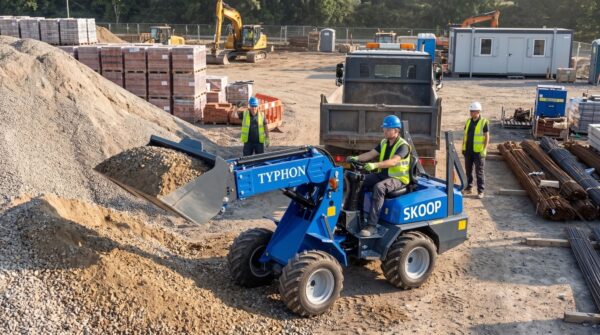
You pull up to a muddy commercial property to install a massive retaining wall, only to realize your crew is going to spend the next three days moving gravel by hand because your loader only has a dirt bucket.
What most contractors overlook is that the base machine is just a power source; the attachments are what actually do the work. Relying on the wrong tool for a specific task burns through labor hours, frustrates your crew, and trashes your profit margins.
Understanding which wheel loader attachments for landscaping are actually worth the investment helps you transform a single machine into a multi-purpose fleet, allowing you to reduce manual labor and drastically improve the profitability of every bid.
The Standard Bucket Limitation
You are staring down a mountain of premium, lightweight mulch that needs to be spread across a sprawling corporate campus.
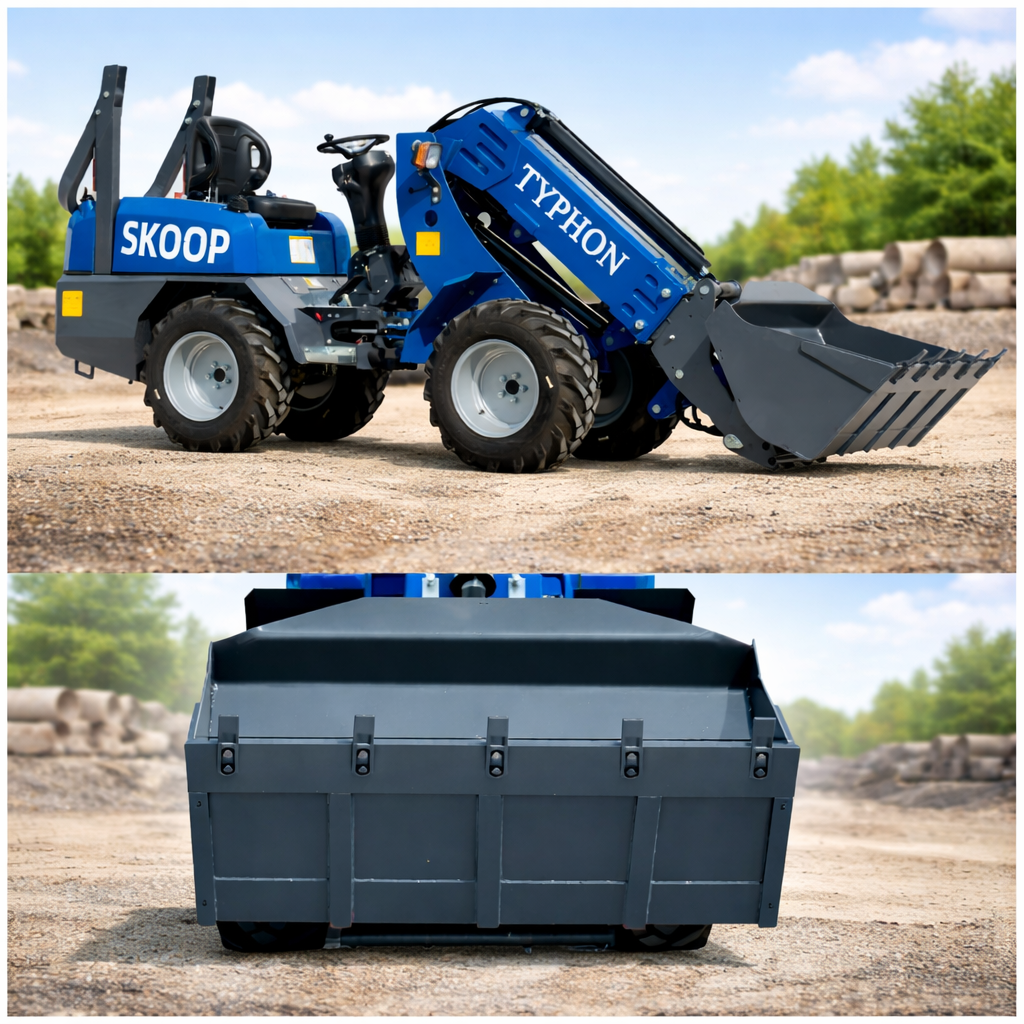
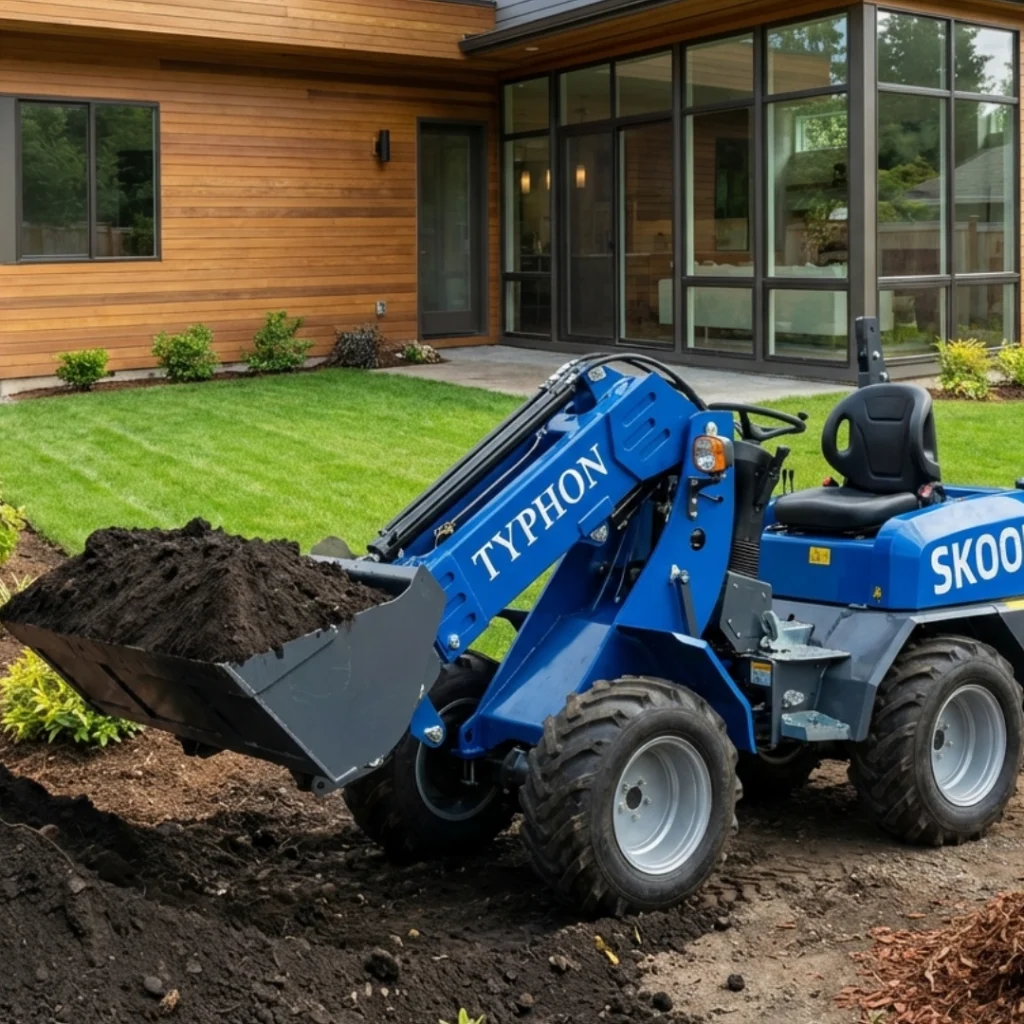
If your operator is using a standard general-purpose dirt bucket, material is constantly spilling over the sides, and the job takes twice as long. Standard buckets are built for dense clay and wet gravel, not bulky landscape materials. Swapping to a high-capacity light material bucket changes the game entirely.
By safely scooping double the volume of mulch or topsoil per pass without exceeding the machine’s tipping load, you drastically cut travel time, save fuel, and keep the crew moving fast. But moving loose bulk material is just the beginning of a complex landscape build.
Moving Beyond Bulk Material
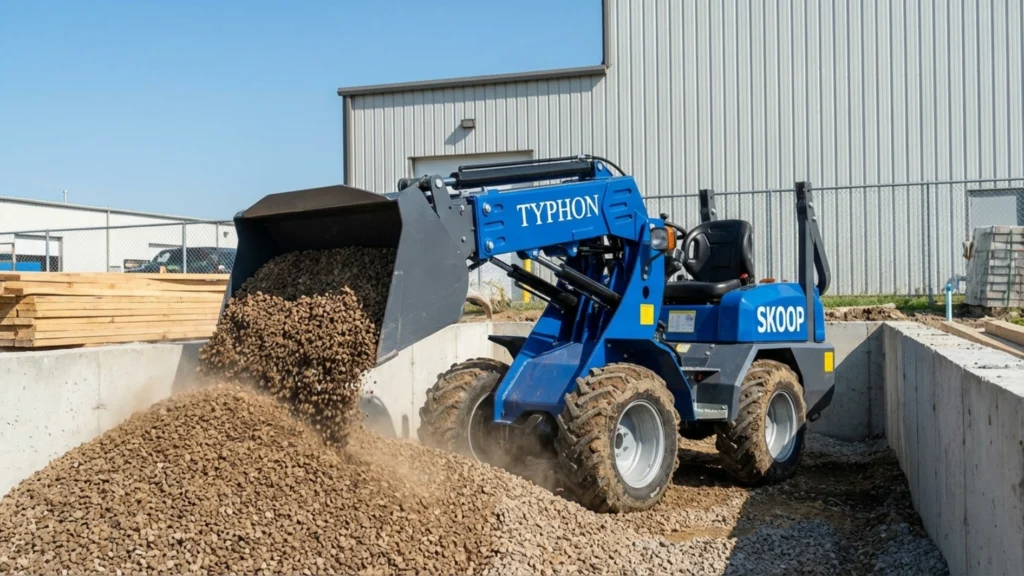
Once the beds are prepped, flatbed delivery trucks arrive loaded with pallets of heavy stone pavers, stacked retaining wall blocks, and balled-and-burlapped trees.
Your high-capacity bucket is completely useless here, and chaining heavy pallets to a bucket edge is a massive safety hazard that usually results in dropped, broken product. This is where heavy-duty pallet forks become mandatory.
Pallet forks instantly turn your loader into a rough-terrain forklift that will not get stuck in the mud like standard warehouse equipment. Your operator can safely pick a pallet of expensive flagstone right off the street and carry it directly to the backyard patio over uneven ground, eliminating countless trips with a wheelbarrow. However, hardscaping requires a clean slate, and sometimes the site fights back.
Tackling Site Clearing
As you take on larger, overgrown residential lots or neglected commercial spaces, you have to physically clear the land before you can make it look good.
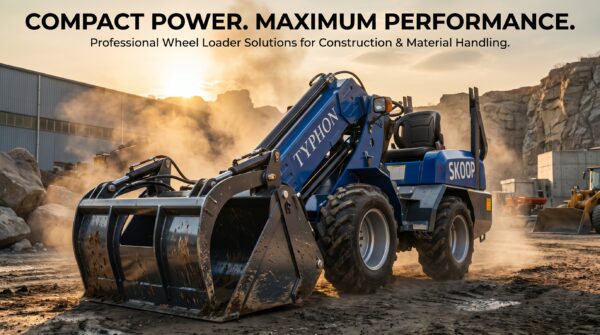
Pallet forks and standard buckets are terrible for handling tangled roots, downed logs, and thick brush. To tackle this efficiently, you need a hydraulic root grabber.
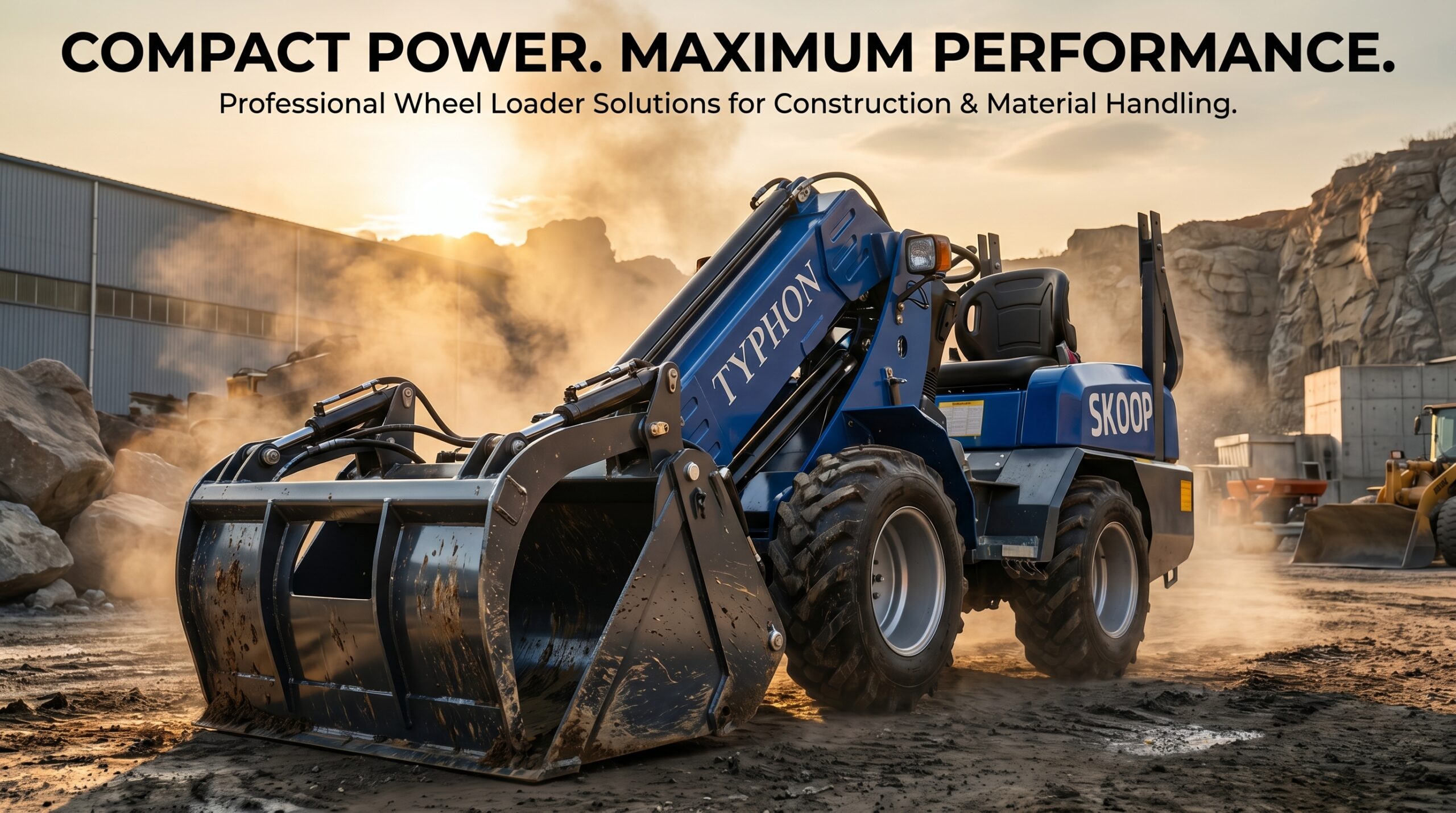
A root grapple uses powerful upper jaws to clamp down on awkward, bulky debris. Instead of three guys with chainsaws dragging branches to a chipper all afternoon, an operator with a grapple can rip out overgrown fence lines and load dump trucks in a fraction of the time. Plus, the open-tine design lets expensive topsoil fall back to the ground instead of being hauled away to the dump. Eventually, though, you will need to do highly precise dirt work.
Heavy-Duty Soil Preparation
When you secure a contract for a massive new housing development or a multi-acre municipal park, hand-raking and simple grading will simply not cut it.
For these extreme, large-scale prep jobs, a hydraulic power box rake (or Harley rake) is the ultimate specialized solution. It uses a spinning, carbide-tipped drum to pulverize dirt clods, weed out rocks, and leave a perfectly smooth seedbed in a single pass.
The trade-off is the high upfront cost and the strict maintenance required for its hydraulic motors and drive chains. It only makes sense if you do high-volume, continuous seedbed prep. If you only occasionally prep small suburban yards, the massive investment and upkeep just aren’t worth it.
The Multipurpose Alternative
Sometimes, you are on a tight urban jobsite where you simply do not have the trailer space to haul three different attachments, and flexibility trumps specialized performance.
When versatility is the top priority, a 4-in-1 multipurpose bucket is the smartest approach. This bucket hydraulically opens down the middle, allowing it to act as a standard bucket, a dozer blade, a scraper, and a grapple.
While it won’t clear thick logs as well as a dedicated root grapple or grade quite like a power rake, it is incredibly efficient for varied tasks. A great real-world use case is a residential driveway teardown: an operator can grab an awkward boulder, backdrag the dirt smooth, and scoop up a pile of debris without ever leaving the cab to swap tools.
Decision-Making Guide
Bringing it all together means looking at your actual daily operations, not just dreaming about a shiny new equipment catalogue.
To choose the right wheel loader attachments for landscaping, audit your last five jobs. If you spend most of your time moving pallets of blocks, invest in high-quality forks. If you do a lot of lot clearing, prioritize a grapple.
Don’t buy highly specialized hydraulic tools unless you have the steady contract volume to pay for them. Focus on attachments that eliminate your most common manual labor bottlenecks, and ensure your loader has a hydraulic quick coupler so operators actually swap tools efficiently throughout the day.
Conclusion
Outfitting your wheel loader with the right attachments completely redefines what your crew can accomplish in a single shift.
Selecting tools that match your specific daily workflow is much more critical than just buying the biggest or most expensive machine on the lot. As labor costs rise and project schedules tighten, letting your loader do the heavy lifting with the proper attachments is the smartest way to secure your profit margins and scale your business.
Frequently Asked Questions
What are wheel loader attachments for landscaping?
They are specialized, interchangeable tools—such as grapples, pallet forks, and light-material buckets—that connect to the front of a wheel loader to perform specific jobs beyond basic dirt moving.
How do I choose the right wheel loader attachments for landscaping?
Review your most time-consuming tasks. Prioritize tools that replace heavy manual labor, like buying pallet forks if your crew constantly moves stone pavers by hand or a grapple if you frequently clear brush.
What is the best wheel loader attachment for site clearing?
A hydraulic root grapple is the top choice. It securely clamps uneven logs and tangled brush while letting valuable topsoil fall through its tines, keeping your haul-away weight strictly limited to the debris.
Are specialized hydraulic landscaping attachments worth it?
Yes, but only if you have the consistent work volume to justify them. Tools like power rakes are expensive and require regular maintenance, making them best suited for high-volume, large-scale commercial projects.
What is the difference between a standard dirt bucket and a 4-in-1 bucket?
A standard dirt bucket is a solid piece of welded steel meant only for scooping and dumping. A 4-in-1 bucket splits open hydraulically, allowing the operator to grab objects like a grapple, push dirt like a small dozer, and scrape surfaces flat.