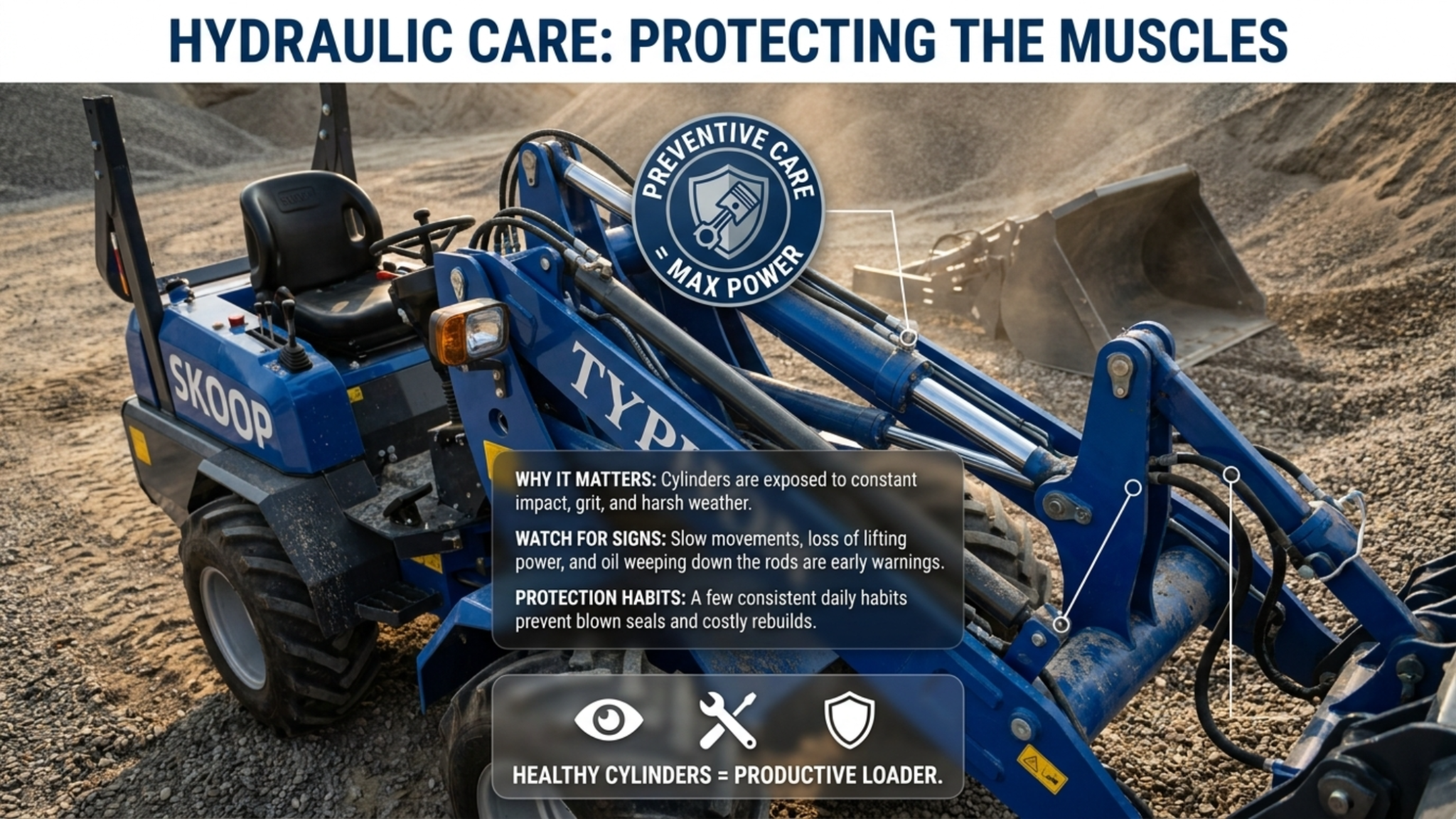
Hydraulic cylinders are the muscles behind every move your wheel loader makes. They lift the arms, curl the bucket, and deliver the force that turns raw horsepower into productive work. When they run smoothly, the machine feels strong and responsive. When they begin to fail, you see it right away in slow movements, lost lifting power, and oil weeping down the rods. Because these cylinders sit out in the open, exposed to mud, rock, dust, and weather, they take a beating that most other parts of the machine never feel. Protecting them from impact, contamination, and abuse is one of the smartest investments you can make in your equipment. A neglected cylinder can lead to blown seals, scored rods, and full rebuilds that pull the loader off the job for days at a time. The encouraging news is that protecting these vital components does not require special tools or deep technical training. It comes down to a handful of consistent habits worked into your daily routine. The five practices below cover everything from quick visual checks to disciplined operating technique, giving you a clear, practical framework to keep your cylinders healthy and your loader earning its keep season after season. Check for Dents and Scratches Daily A few minutes of inspection each morning can save you from a major repair later. Before you start work, walk around your wheel loader and look closely at the shiny metal rods of each hydraulic cylinder. These polished chrome surfaces are precision components, and even small flaws can trigger expensive damage if they slip past unnoticed. Run your eyes along every exposed rod and watch for the warning signs that point to trouble ahead. The goal is to catch a problem while it is still small, before it works its way into the seals and turns into a leak that costs you real money and downtime. During your daily walkaround, pay close attention to the following: The reason these tiny imperfections matter so much comes down to how a cylinder works. As the rod slides in and out of its housing, it passes through tightly fitted seals that keep hydraulic oil where it belongs. Any rough spot on the chrome acts like a blade dragging across those seals thousands of times a day, slowly cutting them apart. What begins as a hairline scratch quickly becomes a significant leak, a loss of pressure, and eventually a cylinder that will not hold its position under load. Spotting a nick or a patch of pitting early gives you the chance to address it before it destroys the seals and contaminates the system. A dependable machine starts with an operator who knows its condition, and a daily inspection is the foundation of that knowledge. Keep Rods Hidden When Parked How you park your wheel loader has a direct effect on how long the cylinders last. Whenever the machine sits idle, whether for a lunch break or overnight, the exposed portion of each rod becomes vulnerable to damage that has nothing to do with the work it was built for. The simplest way to protect those surfaces is to tuck the bucket and lower the lift arms so the shiny rods are pulled back into their housings as far as they will go. Retracting the cylinders shields the polished chrome inside the cylinder body, where bumps, debris, and weather cannot reach it. This single habit, performed at the end of every shift, removes a surprising amount of risk from the equation. Pulling the rods in protects them from several common threats that add up over the life of the machine: The benefit grows the longer the machine sits. A rod left fully extended for days or weeks in a damp yard will start to pit and corrode along the exposed section, and that corrosion becomes the seed of future seal failure once the loader returns to service. Lowering the arms and curling the bucket also drops the overall profile of the machine, which lowers the chance of catching on something during loading, unloading, or storage. Taking thirty seconds to position the cylinders correctly before you walk away is a small discipline that pays you back every time the machine sits unused. Treat it as the natural last step of shutting down, and your rods stay protected through every idle hour. Wipe Down the Rods Dirt is the constant enemy of a hydraulic cylinder, and keeping the rods clean is one of the most effective defenses you have. Wheel loaders work in mud, dust, sand, and all manner of abrasive material, and that grime cakes onto the exposed rods throughout the day. Before you put the machine away or tuck the arms in for storage, take a moment to wipe any dirt, mud, or grit off the exposed metal rods. A clean rag and a careful pass along each rod is all it takes to remove the material that would otherwise cause serious harm. This quick step fits easily into your shutdown routine and protects the most vulnerable surfaces on the machine. The danger lies in what happens when grit is left in place. As soon as the cylinder retracts, the rod carries any dirt or mud directly into the seal assembly, where it acts like sandpaper against the wiper and rod seals. Watch for these situations that make wiping down especially important: When abrasive particles get pushed into the seals, they grind away from the inside, wearing the seals down far faster than normal use ever would. Over time, this leads to premature seal failure, internal leaks, and scoring on the rod surface itself. Once a rod is scored, the damage is permanent and usually means replacing the rod or rebuilding the entire cylinder. Building this simple cleaning step into your routine keeps abrasive material out of the system and protects both the seals and the rods they ride against. It is a small effort that directly extends the working life of every cylinder on the loader, and