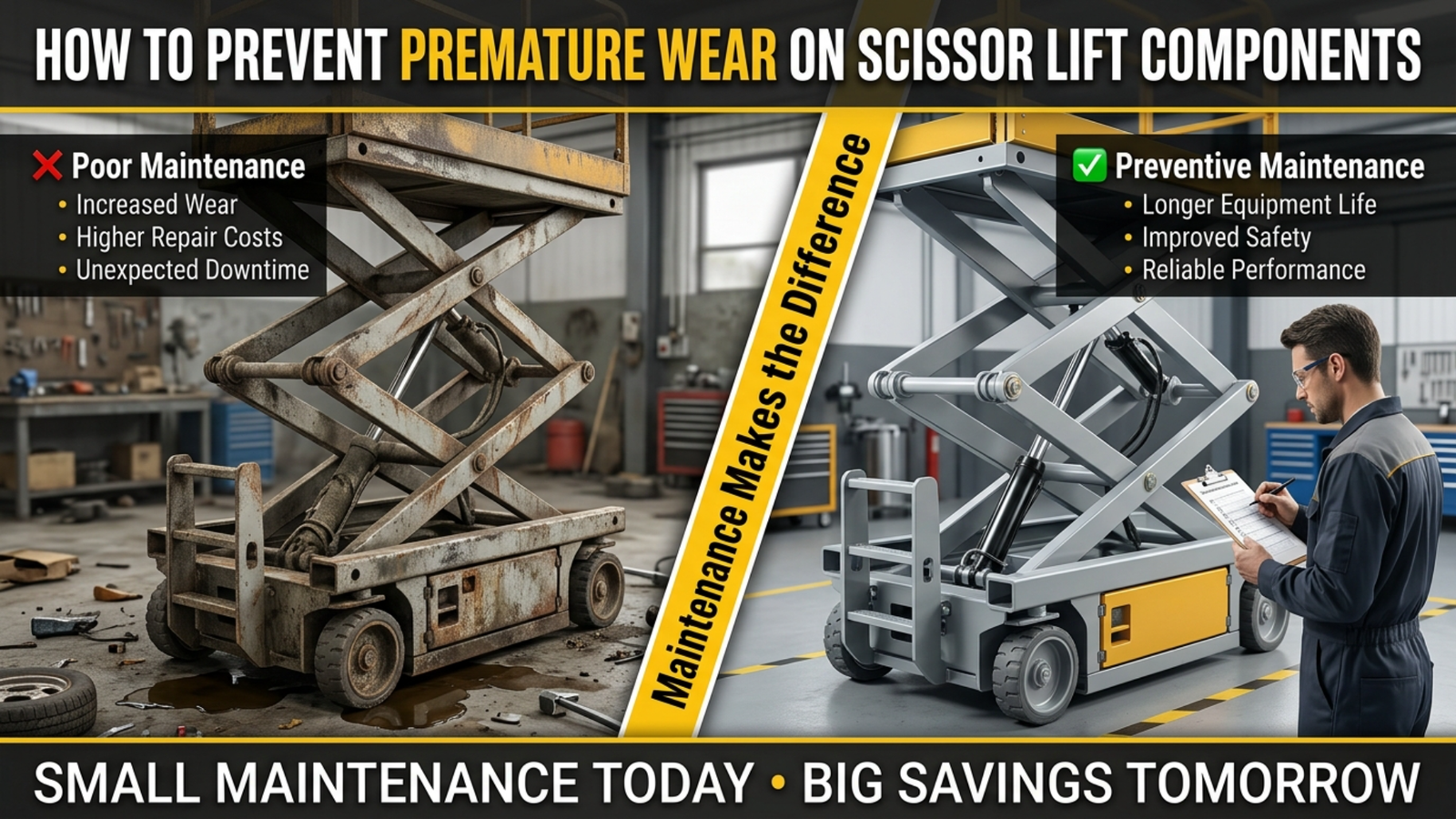
A scissor lift is a serious investment, and how long it lasts depends far more on care than on luck. Every pivot, pin, cylinder, and cable works under real stress each time the platform rises, and neglecting that wear leads to breakdowns, safety risks, and repair bills that climb faster than the machine ever does. The good news is that premature wear is largely preventable. With a few consistent habits built around lubrication, load management, inspections, hydraulic care, and proper storage, you can keep a lift performing reliably for years beyond a poorly maintained one. This guide walks you through five proven practices that protect your equipment, safeguard your operators, and deliver the dependable performance you count on every day. Regular Lubrication and Greasing Friction is the quiet enemy of any scissor lift, and lubrication is your first and most effective defense against it. Every time the platform rises and lowers, the machine’s pivot points, pins, and sliding tracks move against one another under considerable load. Without a protective film of lubricant between those surfaces, metal grinds directly on metal, wearing away material with every cycle. Applying high-quality lubricants to these contact points minimizes that friction, keeps components moving freely, and dramatically slows the degradation that would otherwise shorten the machine’s life. Consistent greasing is not a minor chore; it is one of the simplest, highest-value habits you can build into your maintenance routine. The joints that carry the most stress deserve the closest attention, since they wear fastest when neglected. Focus your lubrication efforts where the machine works hardest: Using the right lubricant matters as much as applying it regularly. High-quality grease resists breaking down under pressure and clings to surfaces rather than washing away, so it keeps protecting long after application. Follow the manufacturer’s recommended schedule and grease specifications rather than guessing, and wipe away old, dirty grease before applying fresh product, since grit trapped in old lubricant acts like sandpaper on the joints. When you keep these high-stress points properly greased, the lift raises and lowers smoothly, operators feel the difference in performance, and the machine avoids the metal-on-metal grinding that leads to costly, premature component failure. Routine Load Capacity Management Respecting the manufacturer’s load limits is one of the most important things you can do to prevent premature wear, and it is also one of the most frequently ignored. Every scissor lift carries a rated maximum weight capacity determined through careful engineering, and that figure represents the load the machine can handle safely without straining its structure or systems. Treating this limit as a firm boundary rather than a loose guideline protects the entire machine. When you operate within the rated capacity, the scissor arms, hydraulics, and platform all work as designed, and the lift delivers the steady, predictable performance your work depends on. Overloading, by contrast, punishes every component at once. Exceeding the weight limit places excessive stress on the scissor arms, which can bend or deform over time, and forces the hydraulic system to work beyond its intended pressure, accelerating pump and cylinder wear. The damage is rarely sudden. Instead, repeated overloading builds mechanical fatigue that quietly weakens the machine until a component finally fails, sometimes catastrophically and at the worst possible moment. Sound load management comes down to a few disciplined practices worth following on every job: Building these habits into daily operation prevents the structural strain, hydraulic overload, and bent arms that shorten a lift’s life. Operators who understand that load limits are engineered safeguards rather than obstacles make smarter decisions, protecting both the equipment and everyone working on or near it while keeping the machine dependable for the long haul. Daily Visual and Operational Inspections A thorough pre-operation inspection is the most cost-effective maintenance habit you can adopt, because it catches small problems before they grow into expensive failures. Spending a few minutes checking the machine at the start of each shift lets operators spot the early warning signs that always precede a serious breakdown. Worn cables, loose fasteners, hydraulic leaks, and damaged components rarely fail without notice; they show subtle symptoms first. When you train operators to look for those symptoms daily, you give yourself the chance to act while a repair is still minor, inexpensive, and safe to schedule on your terms rather than in the middle of a job. A good inspection covers both the visual condition of the machine and how it performs when operated. Work through the key areas systematically: Catching issues early is only half the value; acting on them promptly is what actually prevents damage. A frayed cable left in service can snap, a small leak can drain a hydraulic system, and a loose fastener can lead to misalignment that wears other parts. Addressing these minor problems the moment you find them stops them from cascading into major, costly repairs and dangerous failures. Document what you find, tag any machine that needs attention, and never return a lift to service until issues are resolved. This simple daily discipline keeps your equipment reliable, protects your operators, and preserves the long-term value of the machine. Hydraulic System Maintenance The hydraulic system is the heart of a scissor lift, and keeping it healthy is essential to preventing premature wear across the whole machine. Clean hydraulic fluid is the foundation of that health. As fluid circulates, it can pick up dirt, moisture, and tiny metal particles, and this contamination is remarkably destructive. Grit-laden fluid scores the precision surfaces inside valves and cylinders, wears down the pump, and gradually degrades performance until components fail. Keeping the fluid clean, checking its level and condition regularly, and changing it on the manufacturer’s schedule protects the entire system and preserves the smooth, controlled operation your work requires. Hoses and filters demand equal attention, since they are central to maintaining proper pressure and fluid quality. Hydraulic hoses endure constant pressure and flexing, so inspecting them for leaks, cracks, bulges, and worn spots helps you catch failures before they leave you with a