Top Uses of Wheel Loaders in Construction
Few machines deliver the versatility and raw productivity of a wheel loader on a busy construction jobsite. These powerful, nimble machines handle everything from moving massive volumes of material to supporting precision demolition work, often switching between tasks within a single shift. If you manage a construction fleet or are evaluating equipment purchases, understanding exactly where wheel loaders deliver the most value will sharpen your investment decisions and help you get more out of every machine on your roster.
This guide covers the most important wheel loader uses across construction environments, with practical examples that show why this equipment has earned a central role on jobsites of every scale.
What Makes Wheel Loaders So Valuable in Construction
Before diving into specific applications, it helps to understand the core design features that make wheel loaders so effective across such a wide range of tasks.
A wheel loader’s articulated chassis allows it to turn sharply in tight spaces, making it productive even in congested staging areas. The front-mounted bucket paired with powerful hydraulics delivers exceptional breakout force for digging into compacted material. Wide pneumatic tires distribute the machine’s weight across the ground, protecting finished surfaces and maintaining traction on uneven terrain.
What truly elevates the wheel loader as a construction tool is its attachment compatibility. With the right quick-coupler system, operators can swap from a standard bucket to a pallet fork, snow pusher, grapple, or auger in minutes. This adaptability transforms a single machine into a multi-role asset that supports different phases of a project without requiring additional equipment.
1. Material Handling Across the Jobsite
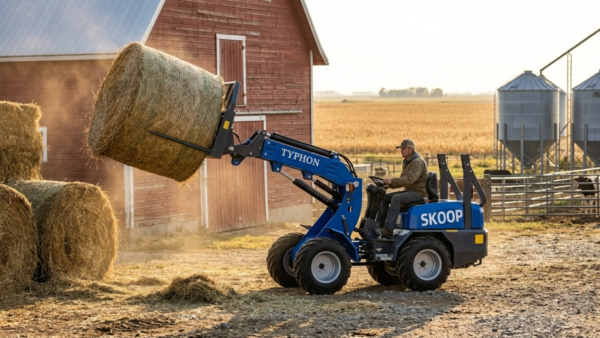
Material handling is the most fundamental wheel loader use in construction. Every project involves moving large quantities of raw material soil, gravel, sand, crushed stone, and recycled concrete from one location to another. Wheel loaders excel at this task because they combine high-capacity buckets with fast cycle times and excellent forward visibility.
On active construction sites, wheel loaders continuously feed material to processing equipment, move stockpiles to new locations, and transport bulk materials from delivery zones to active work areas. A skilled operator can maintain a steady, high-volume material flow that keeps the entire job moving forward efficiently.
For project managers, this translates directly into schedule performance. When your material handling is fast and reliable, your paving crew, concrete crew, and grading operators never wait for what they need. The wheel loader acts as the connective tissue of your operation.
2. Loading Trucks for Hauling Operations
One of the highest-value wheel loader uses on any earthmoving or grading project is truck loading. Whether you are moving excavated soil off-site, loading aggregate for delivery, or clearing a demolition site, the wheel loader is the primary machine that keeps your haul trucks turning productive cycles.
Efficient truck loading requires both machine capability and operator skill. A wheel loader with a large-capacity bucket minimizes the number of passes required to fill a truck, shortening cycle times and maximizing the number of loads your fleet completes per shift. Experienced operators approach the truck from the correct angle, position the bucket precisely over the truck bed, and dump cleanly, reducing spillage and load imbalance.
On large highway and infrastructure projects, wheel loaders are often paired with articulated haul trucks in a continuous loop. The loader fills trucks while one haul truck is on site, and by the time it returns from its dump run, the loader is ready to cycle again. This pairing maximizes overall material movement productivity and keeps projects on schedule.
3. Aggregate Stockpile Management
Aggregate management is a specialized and critically important application of wheel loaders in construction. Quarries, concrete plants, asphalt production facilities, and road construction staging areas all maintain large stockpiles of aggregates — crushed rock, sand, gravel, and reclaimed material. Wheel loaders are the primary machine for building, maintaining, and drawing down these stockpiles.
Proper stockpile management requires operators to push material up the pile from the base, avoiding direct driving over the peak to prevent segregation of different particle sizes. A well-managed stockpile allows production facilities to maintain a consistent feed of correctly graded material to crushing equipment or batch plants, supporting uninterrupted production.
For fleet managers running quarry or asphalt operations, the wheel loader’s uptime and fuel efficiency in this application have an outsized impact on total operational cost. Machines that achieve more bucket cycles per hour in stockpile duty directly lower the cost per ton of aggregate processed. Specifying the right bucket size and machine weight class for your aggregate type is an important purchasing decision that pays dividends across the life of the equipment.
4. Site Cleanup and Debris Removal
Construction sites generate enormous amounts of debris. Excavation spoils, demolished materials, scrap concrete, timber, and general waste accumulate rapidly and must be removed to maintain a safe, organized jobsite. Wheel loaders handle site cleanup faster and more effectively than virtually any other machine.
During the demolition phase of a project, wheel loaders work behind demolition equipment to clear broken concrete, brick, and structural steel from the work area. Their ability to scoop up irregular piles of debris and load them into waiting trucks keeps the site moving and prevents dangerous material accumulation.
During the construction phase, wheel loaders clean up excess soil and spoil from foundation work, clear away leftover form material and scrap, and restore staging areas to usable condition at the end of each shift. This continuous site organization improves safety, reduces trip hazards, and keeps productive work areas accessible for other trades.
For site superintendents, a wheel loader dedicated to cleanup is not an overhead cost it is a safety and productivity investment that keeps the entire jobsite operating efficiently.
5. Supporting Grading and Earthmoving Operations
While motor graders and scrapers handle precision grading, wheel loaders play a critical supporting role in earthmoving operations. They move large volumes of material quickly to areas where graders can fine-tune the grade, feed soil compactors with material, and push dirt to the edge of the working area to clear space for the next cut.
On road construction projects, wheel loaders work alongside graders and compactors in a coordinated sequence. The loader moves bulk material from excavation areas to fill zones, the grader shapes it to the correct grade, and the compactor densifies it to spec. This three-machine sequence drives the efficiency of the entire grading operation.
Wheel loaders also handle subgrade preparation for building foundations by stripping topsoil and organic material from the building footprint, moving that material to a designated stockpile, and bringing in engineered fill to begin building the correct foundation profile.
6. Snow Removal and Winter Operations
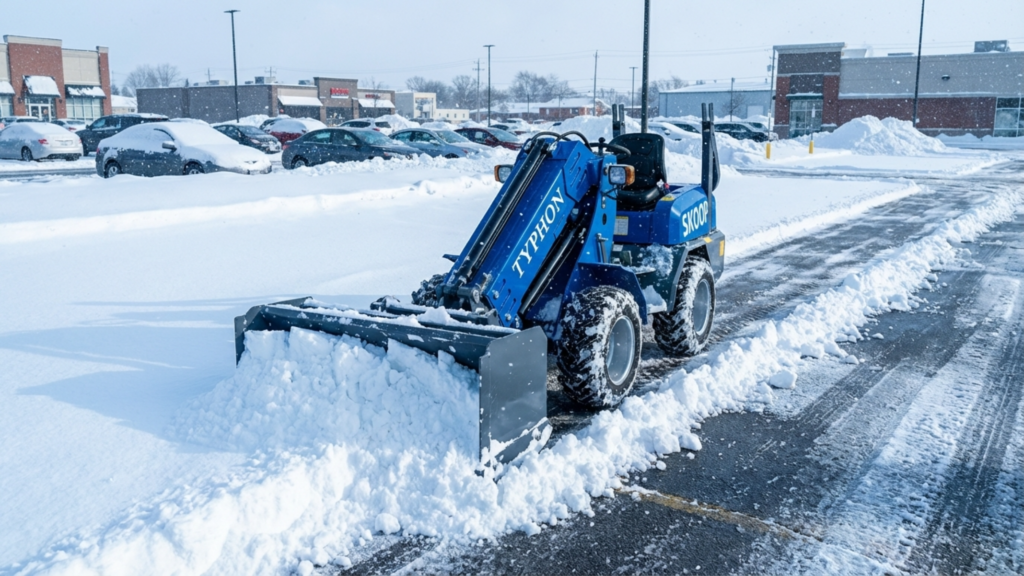
Snow removal is one of the most time-sensitive wheel loader uses, particularly for municipalities, airport authorities, large commercial property managers, and highway maintenance contractors. A wheel loader equipped with a snow pusher blade or large snow bucket can clear massive amounts of snow from parking areas, staging yards, runways, and road shoulders far faster than smaller equipment.
The machine’s speed, maneuverability, and bucket capacity make it uniquely suited for high-volume snow clearing operations. Operators can windrow snow with a pusher blade across wide open areas, then follow up with a bucket to collect and stockpile it away from access routes and loading areas.
For construction firms that operate year-round, the ability to deploy wheel loaders in snow removal during winter months maximizes equipment utilization and creates an additional revenue stream. Many contractors purchase larger wheel loaders partly on the strength of their winter utility.
Airport ground operations are a particularly demanding snow removal environment. Here, a wheel loader’s speed in clearing runways and taxiways between aircraft movements is critical to maintaining on-time departure schedules. Specialized high-capacity snow buckets allow airport wheel loaders to move enormous snow volumes in a single pass.
7. Demolition Support
Demolition is rarely a clean, single-machine operation. After primary demolition equipment brings a structure down, the resulting rubble requires rapid, organized handling. Wheel loaders provide the material management capability that keeps demolition projects moving efficiently.
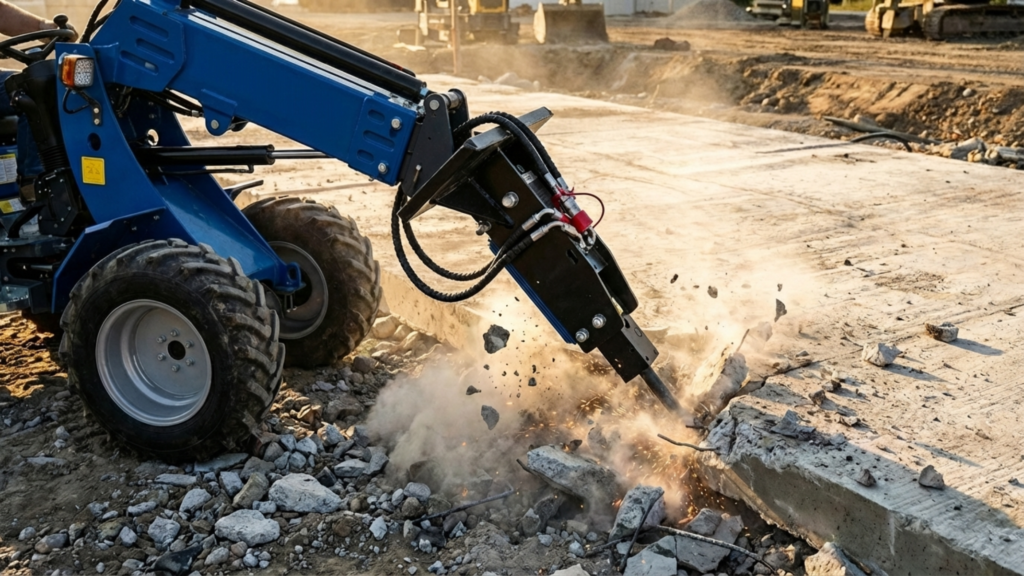
Equipped with a standard bucket or a heavy-duty demolition bucket with cutting edges, a wheel loader can scoop broken concrete and masonry, load it into haul trucks for removal, and clear the footprint for foundation work. Operators must be aware of hidden rebar and structural steel embedded in demolition material, which can puncture tires or damage the bucket. Using the correct heavy-duty bucket specification for demolition work is essential.
For selective interior demolition projects, compact wheel loaders can enter through standard doorways to remove debris from inside a structure, eliminating the need to push debris out through the building envelope and reducing cleanup labor significantly.
8. Landscaping and Land Development
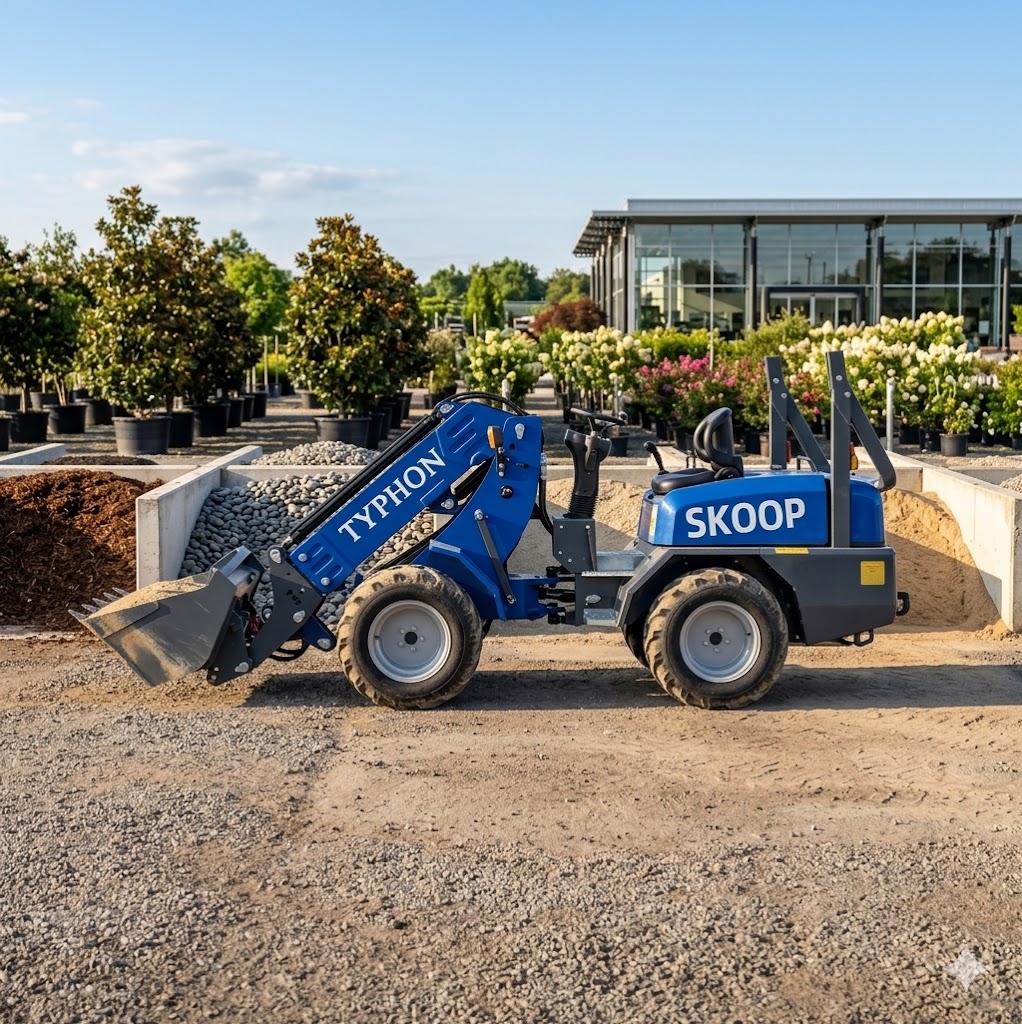
Wheel loaders are indispensable in landscaping and land development applications. They move topsoil, mulch, decorative stone, and sand across large sites efficiently, supporting everything from athletic field construction to large-scale commercial landscape installation.
In land development, wheel loaders strip and stockpile topsoil from the construction footprint, preserving it for redistribution during final grading and landscaping. This topsoil recovery protects a valuable resource and reduces the cost of importing material later in the project.
For landscaping contractors, a compact wheel loader handles more product per hour than a skid steer while maintaining good maneuverability on the finished grade. Mulch spreading, topsoil placement, and sod bed preparation all benefit from the wheel loader’s combination of speed and bucket capacity.
Golf course construction and sports field development are environments where wheel loaders move vast quantities of specialized growing media, drainage aggregate, and structural fill applications, where their speed and bucket capacity deliver a clear productivity advantage over smaller equipment.
9. Attachment-Based Versatility: Transforming One Machine into Many
The true depth of wheel loader uses in construction becomes clear when you explore attachment versatility. A modern wheel loader equipped with a quick-coupler system can shift between task-specific tools rapidly, adapting to the demands of the project without requiring additional machines.
Pallet Forks
Pallet forks transform a wheel loader into a heavy-duty material handler for palletized loads. On construction sites, this means moving cinder block deliveries, sacked materials like sand and mortar, modular wall panels, and prefabricated components. Wheel loader pallet forks handle much heavier loads than a standard warehouse forklift, making them essential for large construction material movements.
Grapple Buckets
Grapple attachments are essential for handling loose, irregular materials that a standard bucket cannot manage cleanly. Timber, brush, rebar bundles, scrap metal, and large demolition debris all require a grapple to handle efficiently. The grapple closes over the material and holds it securely during transport, preventing spillage and improving safety on debris-clearing operations.
Augers
Wheel loader-mounted augers drill holes for fence posts, signage foundations, utility pole installations, and tree planting. On large landscape or infrastructure projects, this attachment eliminates the need for a dedicated auger machine and keeps the wheel loader continuously productive throughout the project.
Brooms and Sweepers
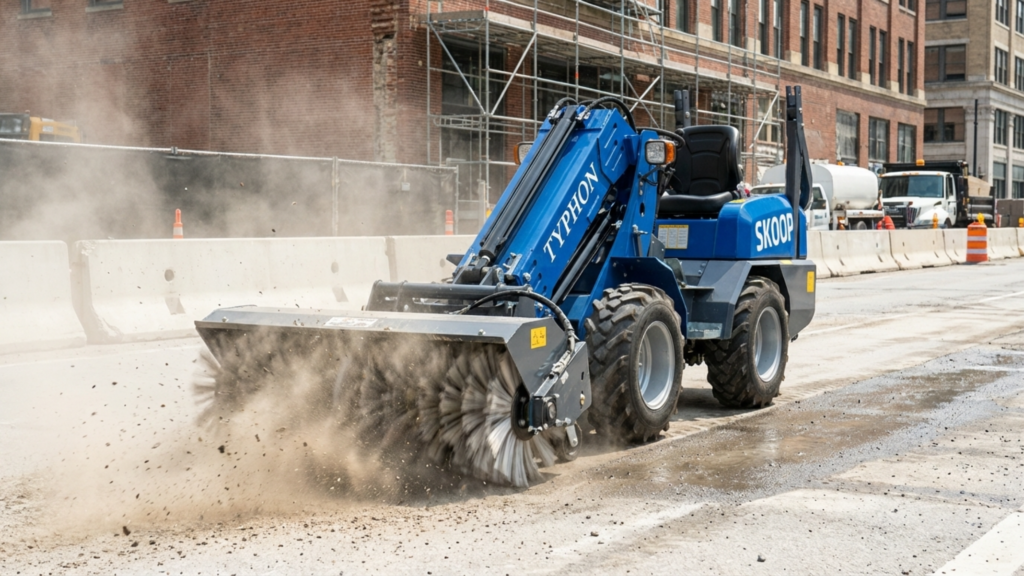
Rotary broom attachments convert the wheel loader into a high-capacity sweeping machine for clearing road surfaces, parking areas, and construction staging yards. This is particularly valuable at the close of a construction project when final surface preparation is required before handover.
Cold Planers and Rippers
For pavement rehabilitation projects, cold planer attachments allow wheel loaders to mill asphalt surfaces before overlay work begins. Rippers break up compacted subgrade or frozen ground, preparing it for excavation or regrading.
Each of these attachments extends the productive range of your wheel loader investment, turning a single capital purchase into a multi-function platform that supports your fleet across the full project lifecycle.
10. Aggregate and Concrete Plant Support
Ready-mix concrete plants and asphalt batch plants are high-throughput production environments that demand reliable, continuous material feeding. Wheel loaders are the standard machine for loading aggregate bins, moving materials between stockpiles and hoppers, and managing the overall raw material inventory at these facilities.
A wheel loader operating at a concrete plant must maintain a consistent, precisely timed feed of correctly sized aggregate to each bin without contaminating one material type with another. This requires highly skilled operators who know the plant’s production rhythm and can anticipate demand before a bin runs low.
For contractors who operate their own batch plants, the wheel loader’s performance in plant support directly determines plant throughput capacity. A machine that delivers more tons per hour to the bins allows the plant to run at full production, maximizing the output that goes to your jobsites.
Choosing the Right Wheel Loader for Your Applications
Understanding wheel loader uses in construction only pays off when you match the right machine configuration to your specific work. Here are the key selection factors to evaluate:
Bucket capacity and machine weight class. Larger buckets and heavier machines deliver more material per cycle but require more space to operate and consume more fuel. Match your machine size to your primary application.
Engine power and hydraulic flow. Attachment-intensive operations require high hydraulic flow to power tools effectively. Verify that the machine’s hydraulic output meets the requirements of your planned attachments.
Tire specification. Smooth concrete surfaces require different tires than loose aggregate stockpiles or muddy earthmoving sites. Select the correct tire specification for your dominant operating environment.
Quick-coupler system. If you plan to use multiple attachments, invest in a quality quick-coupler that allows fast, safe attachment changes without leaving the cab.
Cab comfort and visibility. Operators spend long shifts in the cab. Ergonomic controls, clear sightlines to the bucket, and a comfortable seat directly impact productivity and reduce operator fatigue over the course of a shift.
Conclusion
Wheel loaders in construction are not a single-use tool. They are one of the most flexible, high-value assets a fleet manager can invest in. From loading trucks and managing stockpiles to supporting demolition, landscaping, and plant operations, the wheel loader’s combination of power, speed, and attachment versatility makes it productive across virtually every phase of a construction project.
Evaluate your current project mix, identify the applications where your team experiences the most workflow friction, and assess whether a wheel loader or an additional wheel loader addresses those gaps. A well-specified machine, operated by a well-trained crew, will deliver returns that justify the investment across many years of productive service.
Talk to a trusted equipment dealer about your specific site conditions and application requirements. The right configuration, matched to your work, is where the real value is unlocked.