Cab Safety Features for Wheel Loader Operators and Construction Jobsites
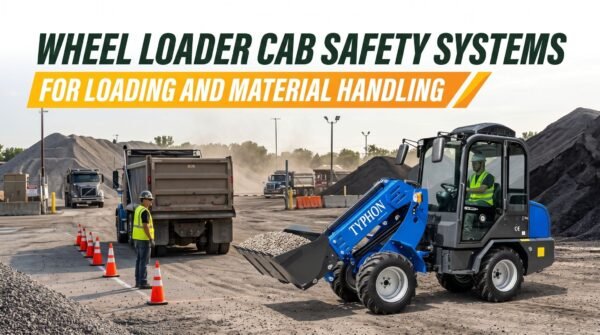
Wheel loaders operate around heavy materials, trucks, stockpiles, and other equipment, making operator protection and visibility important throughout the workday. A dirty rear camera, faulty door latch, or defective seat belt can reduce the protection and information available to the operator when conditions change. Pre-shift inspections help identify these problems before the machine enters an active work area.
Cab safety systems include the protective operator structure, seat belt and restraint system, doors and latches, visibility aids, warning devices, and other controls that support safe operation. Cameras, mirrors, windows, and access systems help the operator monitor the surrounding area, while restraints and structural protection help keep the operator secure during sudden machine movement. Each component needs to remain functional and should be checked regularly for damage, contamination, or abnormal operation.
Operators should address safety-system problems before starting productive work rather than relying on the equipment to compensate for a known fault. Keeping cameras and windows clean, testing restraints and latches, and confirming warning and emergency controls function properly can improve awareness and operator protection. Combining these checks with controlled operation and continuous attention to people and equipment around the loader helps create a safer material-handling environment.
Protective Cab Structure
The cab structure is the operator’s primary physical protection on a wheel loader. It creates a protective space around the operator during normal loading and material handling, and it helps reduce exposure to hazards that can arise around moving materials and equipment. On a busy site, those hazards include rollovers on stockpile slopes, rock falling from a raised bucket, and debris thrown during loading.
Most wheel loader cabs are built around a rollover protective structure designed to help maintain a survival space if the machine tips. Many also include falling object protection, which shields the operator from material that drops from above. Check the certification label on your machine to confirm which protection standards the structure meets. The frame, roof, and pillars work together as one engineered system, and that system depends on its original design remaining intact.
The structure only protects you when it hasn’t been weakened. Unauthorized drilling, welding, cutting, or bolting accessories onto the frame can reduce its strength, sometimes in ways you can’t see. Any modification or structural repair should follow the manufacturer’s procedures and be completed by a qualified technician. If the cab has struck a beam, wall, or overhead object, have it inspected before the machine returns to work.
Include the cab structure in every walkaround. Look for cracks, bends, missing or loose bolts, and damage to the pillars and roof. Check that windows and screens are intact, since cracked glass can fail under impact and reduce visibility. A protective cab that’s well maintained gives the operator confidence to focus on the work.
Key takeaway: A strong, certified cab structure provides a protective space around the operator, so inspect it regularly and never modify it outside the manufacturer’s procedures.
Seat Belts and Operator Restraints
Seat belts and restraint systems keep the operator properly positioned inside the cab. That position matters because the protective structure can only help an operator who stays inside it. In a rollover or sudden lurch, an unbelted operator can be thrown against the controls, out of the seat, or partly outside the cab, where the structure offers no protection.
Wheel loader work produces plenty of sudden movement. Loading from a stockpile face, traveling over rough yard surfaces, dropping a wheel into a soft spot, or braking hard with a full bucket can all shift the operator’s position without warning. Correct seat belt use keeps the operator seated and in control of the steering and hydraulics through those moments. Fasten the seat belt every time you operate, including short moves across the yard.
Restraints must fit and function correctly. Wear the lap belt low and snug across the hips rather than across the stomach. Adjust the seat so you can reach every control comfortably while staying fully seated, with your back against the backrest. On machines with an operator presence system, the seat switch or belt switch may be linked to certain functions, so never bypass or disable these systems for convenience.
Inspect the restraint system before each shift. Check the webbing for cuts, fraying, burns, and fading from sun exposure. Confirm that the buckle latches securely and releases easily. Test the retractor with a sharp pull to make sure it locks as designed. Also check the mounting hardware for looseness. Replace a damaged belt immediately with an approved part rather than repairing it.
Key takeaway: Seat belts and restraints keep the operator positioned securely during loading, travel, and uneven-ground operation, so wear them every time and replace any damaged component before work begins.
Visibility From the Cab
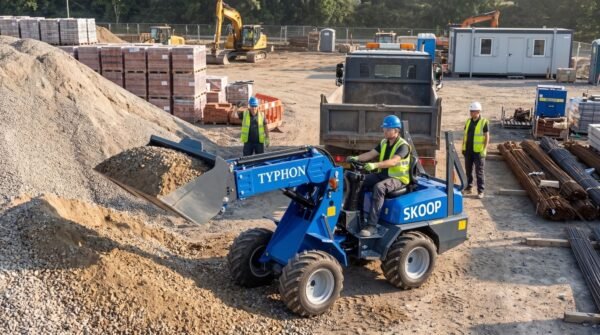
Clear visibility helps a wheel loader operator monitor the bucket, load, travel path, and people around the machine. Windows, mirrors, cameras, lighting, and proper load positioning all contribute to better awareness, especially when reversing or working around busy areas.
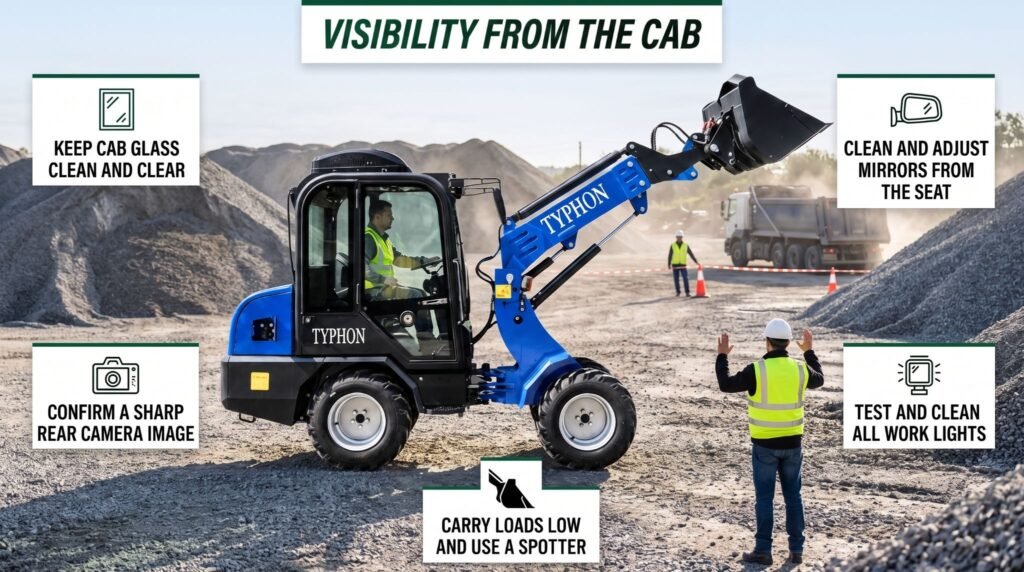
- Windows & Glass: Keep windows clean and undamaged so dust, mud, and condensation do not restrict the operator’s view.
- Mirrors & Cameras: Adjust mirrors correctly and keep camera lenses clean to improve visibility around rear and side blind spots.
- Work Lighting: Check front, rear, and side lights to maintain clear visibility during low-light or poor-weather conditions.
- Load Position: Carry loads low during travel to reduce forward obstruction and raise the bucket only when needed for placement.
- Site Awareness: Use trained spotters and agreed signals when visibility is limited, and stop movement if someone enters the work area unexpectedly.
Key takeaway: Windows, mirrors, cameras, and lighting improve awareness around trucks, workers, and structures, so keep every visibility feature clean and working, carry loads low, and use spotters where sightlines are limited.
Warning and Monitoring Systems
Warning indicators, alarms, gauges, and monitoring systems give the operator information about the machine’s condition. They help the operator spot abnormal conditions early and respond according to the manufacturer’s operating procedures. On a loader working long hours under heavy load, early warning can prevent a breakdown or a more serious incident.
Modern wheel loader displays typically monitor engine temperature, oil pressure, coolant level, hydraulic oil temperature, transmission condition, charging system output, and brake pressure. Many machines also show parking brake status, fuel level, and service reminders. Depending on the model, the display may also provide rear object detection alerts or load weighing information. Review the operator’s manual so you know what each indicator means and what action it requires.
Start-up provides the first check. Watch for indicators to illuminate briefly as the system runs its self-test, and confirm they clear once the engine is running. An indicator that stays lit points to a condition that needs attention before work begins. During operation, glance at the gauges regularly rather than waiting for an alarm.
When a warning appears during work, respond calmly and follow the manufacturer’s procedure. In most cases, that means lowering the bucket, moving to a safe, level location away from traffic, and shutting down if required. Continuing to work through an active warning can turn a minor problem into a serious failure.
External warning devices protect the people around the machine. Test the horn and backup alarm before every shift, and confirm the alarm is loud enough to be heard over trucks, crushers, and other jobsite noise. Check beacons and warning lights as well. Brief the crew so everyone understands that an alarm signals real machine movement.
Key takeaway: Warning indicators, alarms, and monitoring systems alert the operator to machine conditions that need attention, so confirm they work at start-up and act on every warning according to the manufacturer’s procedures.
Door and Access Systems
Cab doors and access points serve two purposes. They let the operator enter and exit the machine safely, and they keep the operator area properly enclosed during work. A door that swings open during operation can expose the operator to the outside of the machine, and steps or handholds in poor condition can turn routine entry into a fall hazard.
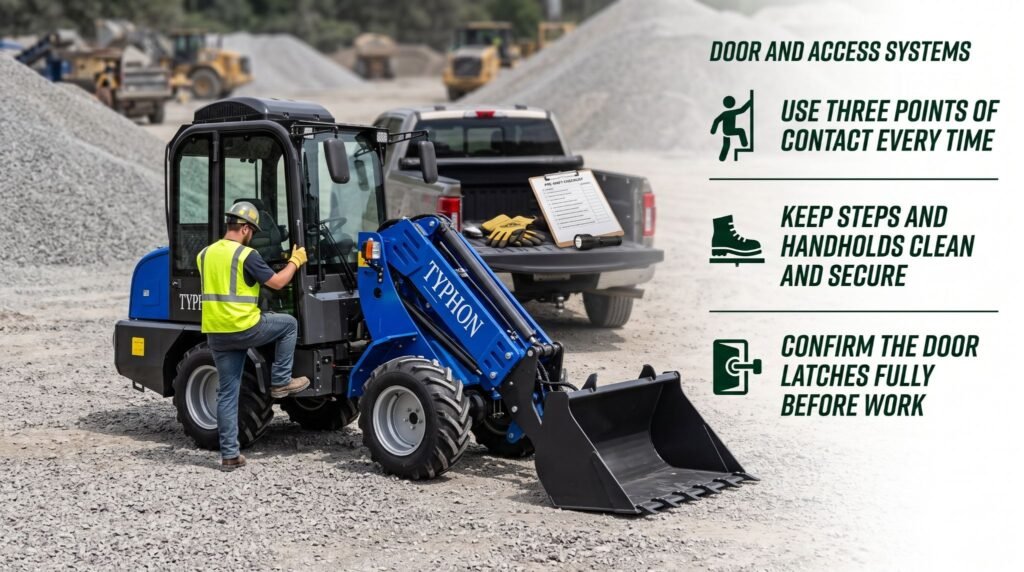
Falls while climbing on and off machines are a common cause of operator injuries. Wheel loader cabs sit high off the ground, and steps can become slick with mud, ice, or hydraulic oil. Use the designated steps and handholds every time, face the machine while climbing, and keep three points of contact, either two hands and one foot or two feet and one hand. Never jump from the cab or use the steering wheel, controls, or door as a handhold.
Prepare the machine before entering or leaving the cab. Lower the bucket fully to the ground, engage the parking brake, and engage the hydraulic lockout where equipped. Shut off the engine before stepping down, unless the manufacturer’s procedure specifies otherwise. These steps prevent unexpected movement if a control is bumped during entry or exit.
Inspect doors and access components during every walkaround. Confirm that the door latches securely in both the closed and open positions, and that hinges move freely without excessive play. Check the steps for damage, missing anti-slip surfaces, and buildup of mud or debris. Make sure handholds are tight. Also check that windows open, close, and latch as designed. Identify the emergency exit, which may be a rear window or alternate door, and confirm any glass-breaking tool is present and secured.
Key takeaway: Secure door latches, windows, steps, and handholds support safe entry and exit and keep the cab properly enclosed, so use three points of contact and repair any access component before operating.
Emergency and Operator Controls
A clearly arranged control layout lets the operator manage loader functions while staying focused on the work area. When steering, travel, bucket, and lift controls fall naturally to hand, the operator spends less attention searching for controls and more attention watching trucks, workers, and the load. That focus is a safety feature in its own right.
Wheel loader cabs typically combine a steering wheel or joystick steering, a loader joystick for lift and tilt functions, and controls for travel direction, speed range, and auxiliary hydraulics. Proportional hydraulic controls let the operator raise, lower, and position the bucket gradually. Smooth, overlapping inputs keep the load stable and reduce sudden shifts in the machine’s balance, especially when loading high-sided trucks or working near people. Before moving the machine, confirm the active control settings, since some loaders offer adjustable response modes.
Emergency and shutdown controls provide protection when an unexpected situation occurs. Depending on the machine, these may include an emergency stop, an engine shutdown switch, a parking brake control, and a hydraulic lockout. Some loaders also provide secondary steering that allows controlled steering if primary hydraulic power is lost. Know the location and function of every emergency control before you operate, and confirm each one works during the pre-shift check. In an emergency, your response needs to be immediate and automatic.
Keep the control area clean and uncluttered. Loose items such as water bottles, phones, and tools can roll under pedals or jam a control. Mud on the floor and pedals can cause a foot to slip. Make sure every control moves freely and returns to neutral when released, and report any control that sticks, drifts, or responds unpredictably before the machine returns to work.
Key takeaway: Clearly arranged operator controls keep attention on the work area, while emergency controls and shutdown systems allow a fast response, so know every control’s location and confirm each one works before operating.
Conclusion
Wheel loader cab safety systems work together to protect the operator and everyone nearby during loading and material handling, and they deliver their full value only when they’re inspected, maintained, and used correctly every day: a certified cab structure provides a protective space around the operator, seat belts and restraints keep the operator inside that space, clean windows, mirrors, cameras, and lights maintain awareness of trucks and workers, secure doors and access systems support safe entry and a properly enclosed cab, warning and monitoring systems flag problems before they become failures, and clearly arranged emergency and operator controls allow a fast, confident response when conditions change. Before your next shift, inspect the cab structure for damage, test the seat belt latch and retractor, clean every window, mirror, camera lens, and light, confirm the door latches and the steps and handholds are secure, watch the warning indicators clear at start-up, test the horn, backup alarm, and emergency controls, and keep the floor and control area free of loose items.
Frequently Asked Questions
What is the purpose of a wheel loader safety cab?
A safety cab provides a protected operator area and supports safe control of the machine during loading, lifting, travel, and material handling. The cab structure, seat restraints, visibility features, controls, and protective systems work together to help protect the operator from machine movement, falling objects, and jobsite hazards.
Why are seat belts important in a wheel loader?
Seat belts keep the operator positioned securely inside the cab during machine movement, sudden stops, uneven travel, or changing operating conditions. The protective cab structure can only provide its intended protection when the operator remains properly seated and restrained. Seat belts should be inspected regularly and used according to the manufacturer’s procedures.
How does cab visibility improve safety?
Good visibility helps the operator monitor the bucket, load, travel path, workers, vehicles, and surrounding obstacles. Clean windows, properly adjusted mirrors, cameras where equipped, and effective work lights can improve awareness around the machine. Clear sightlines are especially important when loading near other equipment or operating in confined and busy areas.
What are wheel loader warning systems used for?
Warning systems provide information or alerts about machine conditions that may require operator attention. Depending on the machine, these may indicate issues involving temperature, pressure, fluid levels, or other operating conditions. Operators should respond to warnings according to the manufacturer’s procedures rather than ignoring or bypassing them, helping prevent damage and unsafe operating conditions.