Kubota Wheel Loader Engine Guide: Real Performance, Not Just Specs
What Makes a Kubota Wheel Loader Engine Different
If you’ve spent any time around compact construction equipment, you’ve probably seen Kubota engines in everything from mini excavators to skid steers. The same thinking applies to a Kubota wheel loader: basic design, steady performance, and an emphasis on long-term dependability rather than chasing high-horsepower numbers.
Kubota engines are generally compact, in-house-built diesel engines. This is important. It means more fusion of the engine with the machine. You don’t get a “stock engine put into a loader.” Instead, the cooling system, hydraulics, and power delivery are integrated.
So on the smaller wheel loaders you see this reflected in smooth operation, not raw power. It’s not an aggressive machine, but it’s consistent, and that’s usually more helpful on a real job.
Practical example:
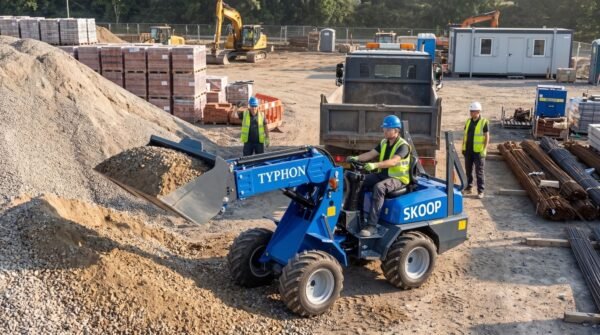
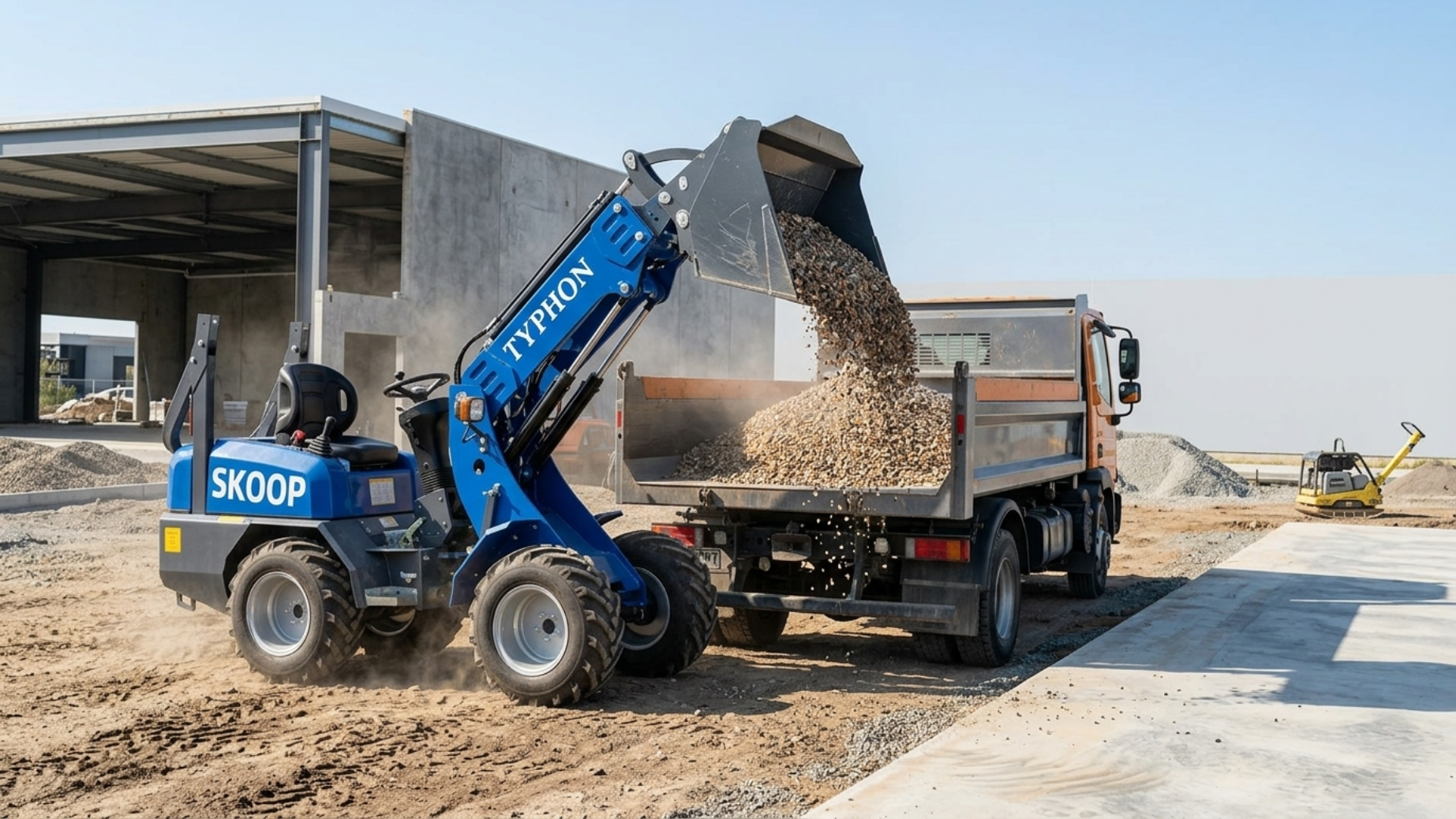
On a landscaping job, where you’re loading soil or gravel into small trucks, consistency matters more than peak power. A Kubota wheel loader will keep a steady cycle without overheating or sudden drops in performance.
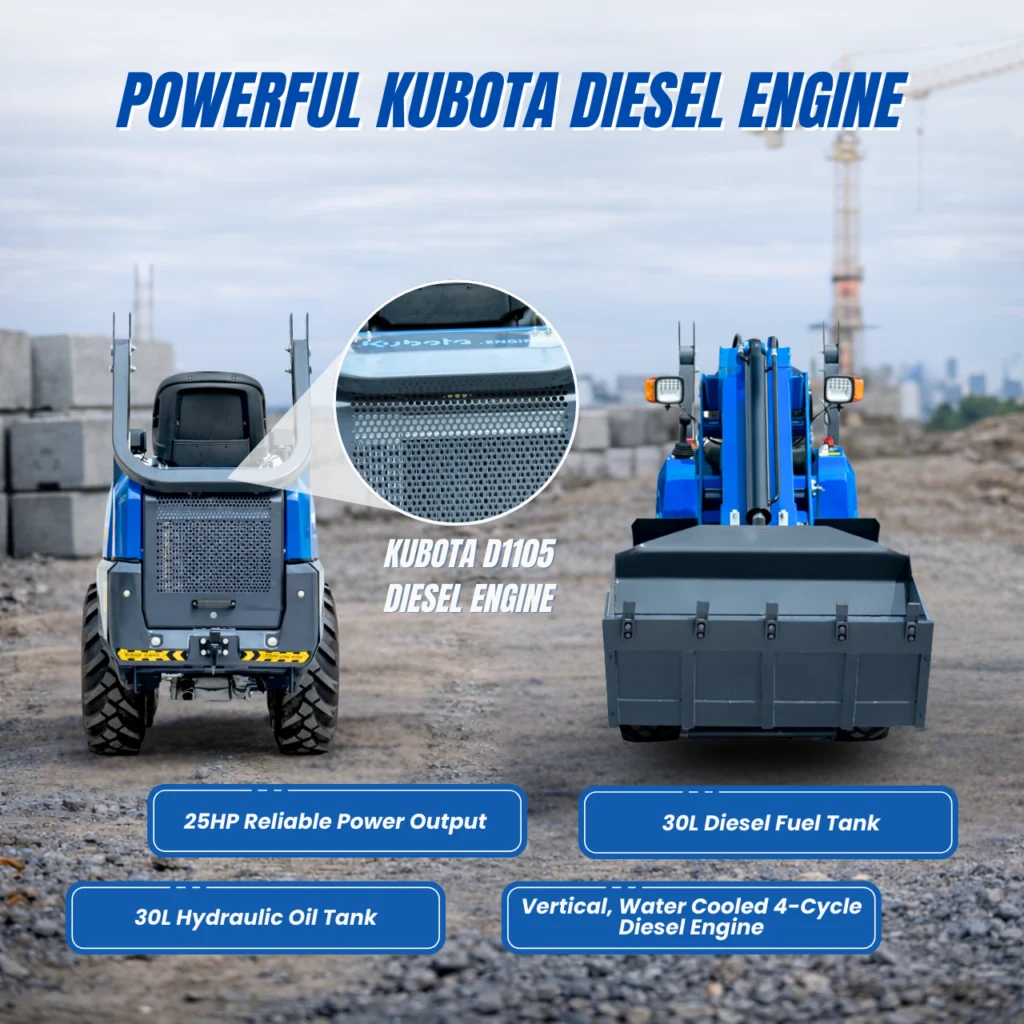
Engine Power vs Real Jobsite Performance
A common mistake is focusing only on horsepower. It’s easy to compare numbers on paper, but real performance depends on how the engine delivers that power.
Kubota engines are tuned for low-end torque, not just top-end output. That means you get pulling power at lower RPMs—exactly where wheel loaders spend most of their time.
On a job site, this translates to the following:
- Better control when pushing into a pile
- Less stalling under load
- Smoother bucket movement
Instead of revving the engine hard, operators can work at moderate speeds and still get solid performance.
Real jobsite logic:
If you’re loading wet sand, the resistance is high. A high-horsepower machine might still struggle if torque delivery isn’t smooth. Kubota engines handle this better because they build power gradually instead of spiking.
Fuel Efficiency: Where Kubota Engines Stand Out
Fuel cost is one of the biggest long-term expenses for any machine. This is where Kubota quietly does well.
Their engines are designed to run efficiently at lower RPMs. You’re not constantly pushing the machine hard to get work done. Over time, that adds up.
You may not notice the difference in a single day, but over weeks or months, fuel savings become clear—especially for small businesses or contractors running machines daily.
Example from real use:
A small contractor using a compact wheel loader 6–8 hours a day may see noticeably lower fuel consumption compared to larger, higher-revving machines. That’s not marketing—it’s just how lower RPM engines behave.
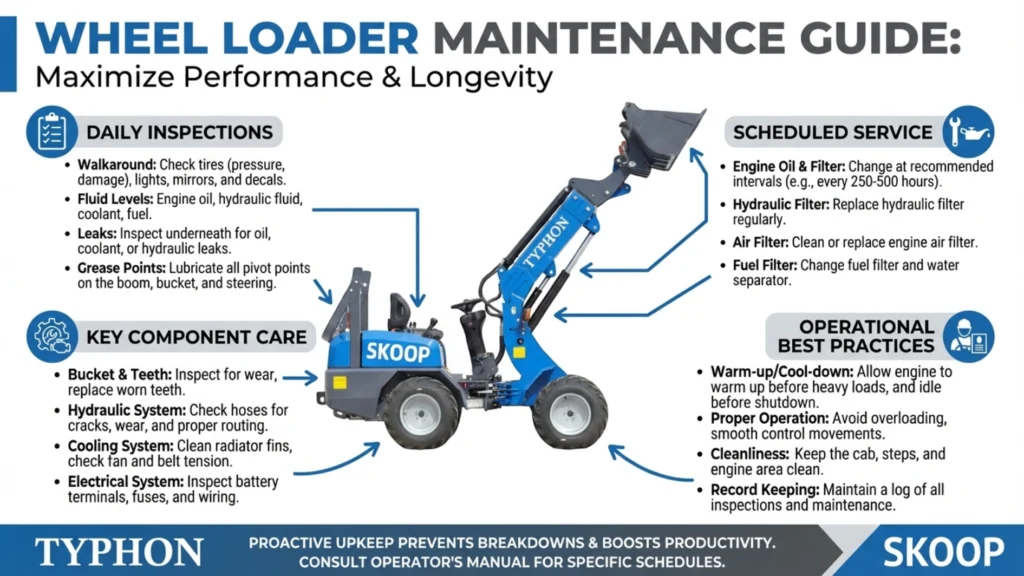
Maintenance Reality: What Owners Should Expect
Kubota engines have a reputation for being easy to maintain. That doesn’t mean “no maintenance”—it means fewer surprises.
Typical maintenance includes the following:
- Regular oil and filter changes
- Air filter checks (especially in dusty environments)
- Fuel system cleaning or filter replacement
Parts are widely available, and most mechanics are familiar with Kubota systems.
What matters on real jobsites:
Downtime is more expensive than parts. A simple engine that’s easy to fix often beats a more complex one that needs specialized service.
Example:
If a loader stops working in the middle of a project, a local mechanic can usually diagnose a Kubota engine quickly. That’s a big advantage in areas where dealer support is limited.
Matching Engine Size to Your Work
Not every job needs a large engine. In fact, choosing too much power can be a problem.
Kubota wheel loaders are often used in the following:
- Small construction sites
- Farms and agricultural work
- Warehouses or material yards
- Landscaping projects
For these jobs, a compact, efficient engine is usually the better choice.
Simple rule:
- Light material + tight space → smaller engine
- Heavy material + continuous loading → larger engine
Real-world scenario:
If you’re working in a warehouse loading pallets or loose material, a smaller Kubota wheel loader will be easier to control, cheaper to run, and more practical than a large machine.
Common Mistakes Buyers Make
Buying a wheel loader isn’t just about brand—it’s about fit. Here are a few mistakes that come up often:
1. Choosing based on horsepower alone
As mentioned earlier, power delivery matters more than the number itself.
2. Ignoring fuel consumption
A cheaper machine upfront can cost more over time if it burns more fuel.
3. Overestimating workload
Many buyers choose a larger machine “just in case.” In reality, they end up using only 60–70% of its capacity.
4. Forgetting maintenance access
Even a good engine becomes a problem if it’s hard to service in your area.
Better approach:
Think about your daily tasks, not worst-case scenarios.
Is a Kubota Wheel Loader Right for You?
A Kubota wheel loader makes sense if you value the following:
- Reliability over maximum power
- Lower fuel usage
- Simple maintenance
- Smooth, predictable operation
It may not be the best fit if you need heavy-duty, high-output performance for mining or large-scale earthmoving. But for most small to mid-size operations, it’s a practical choice.
Real takeaway:
Kubota engines are built for steady work. If your job requires consistency more than aggression, they’re a good match.
FAQ
Q: Are Kubota wheel loader engines reliable?
Yes. They are known for long service life and consistent performance when properly maintained.
Q: Do Kubota engines use a lot of fuel?
No. They are generally fuel-efficient, especially at lower operating speeds.
Q: Are parts easy to find?
In most regions, yes. Kubota has strong global support and widely available parts.
Q: Can beginners operate a Kubota wheel loader easily?
Yes. The smooth power delivery makes them easier to control compared to more aggressive machines.
Conclusion
A Kubota wheel loader engine isn’t about showing off power—it’s about getting work done day after day without trouble. For many operators and small businesses, that’s exactly what matters.