Wheel Loader Maintenance: Maximize Machine Lifespan
Heavy machinery represents a massive capital investment for your business. Protecting that investment requires more than just careful operation; it demands a proactive approach to heavy equipment care. When you neglect routine service, you risk unexpected breakdowns, costly repairs, and significant project delays.
This guide provides practical tips for maintaining your wheel loader to keep your machine running safely and efficiently. You will learn the exact steps needed to protect your engine, hydraulic systems, and structural components. By mastering daily inspections, precise lubrication routines, and scheduled servicing, you guarantee maximum uptime and profitability for your entire fleet.
The Importance of Heavy Equipment Care
Every hour your machine sits idle costs your business money. Maximizing lifespan starts with a fundamental shift in how your team views maintenance. It is not just a frustrating repair task; it is a critical operational strategy that drives your success.
Consistent wheel loader maintenance prevents catastrophic component failures before they happen. Replacing a worn hydraulic hose costs a fraction of what you will pay to replace a seized hydraulic pump. Furthermore, excellent maintenance preserves the resale value of your equipment. When it is time to upgrade your fleet, well-documented service records ensure you receive a strong financial return on your initial investment.
Perform Thorough Daily Inspections
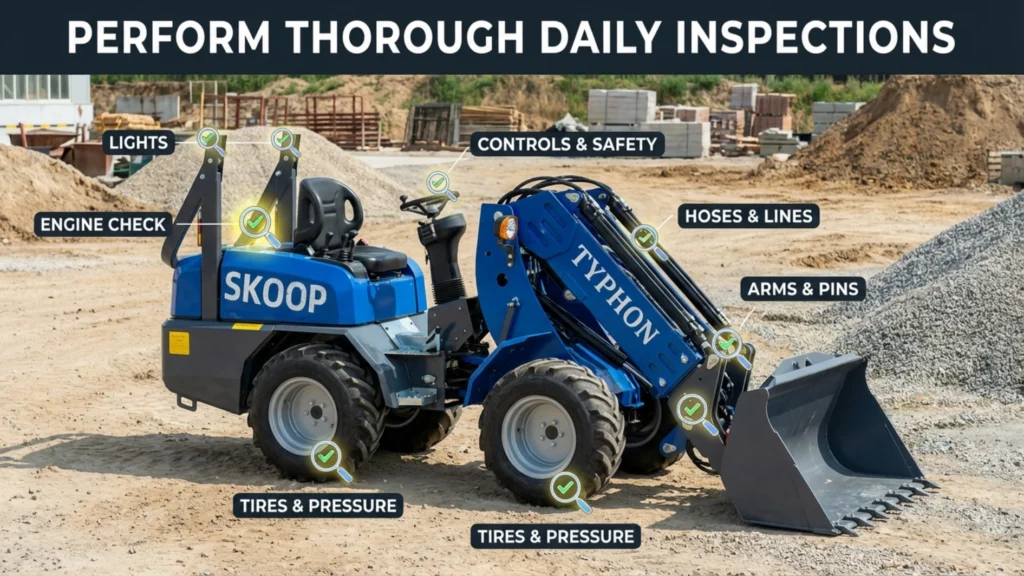
The most effective way to prevent major mechanical failures is to catch small issues early. Operators must complete a comprehensive walkaround inspection before turning the ignition key every single shift. This daily habit is the foundation of reliable heavy equipment care.
Fluid Levels and Filters
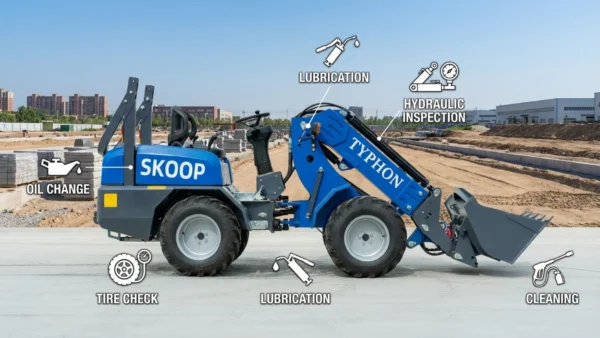
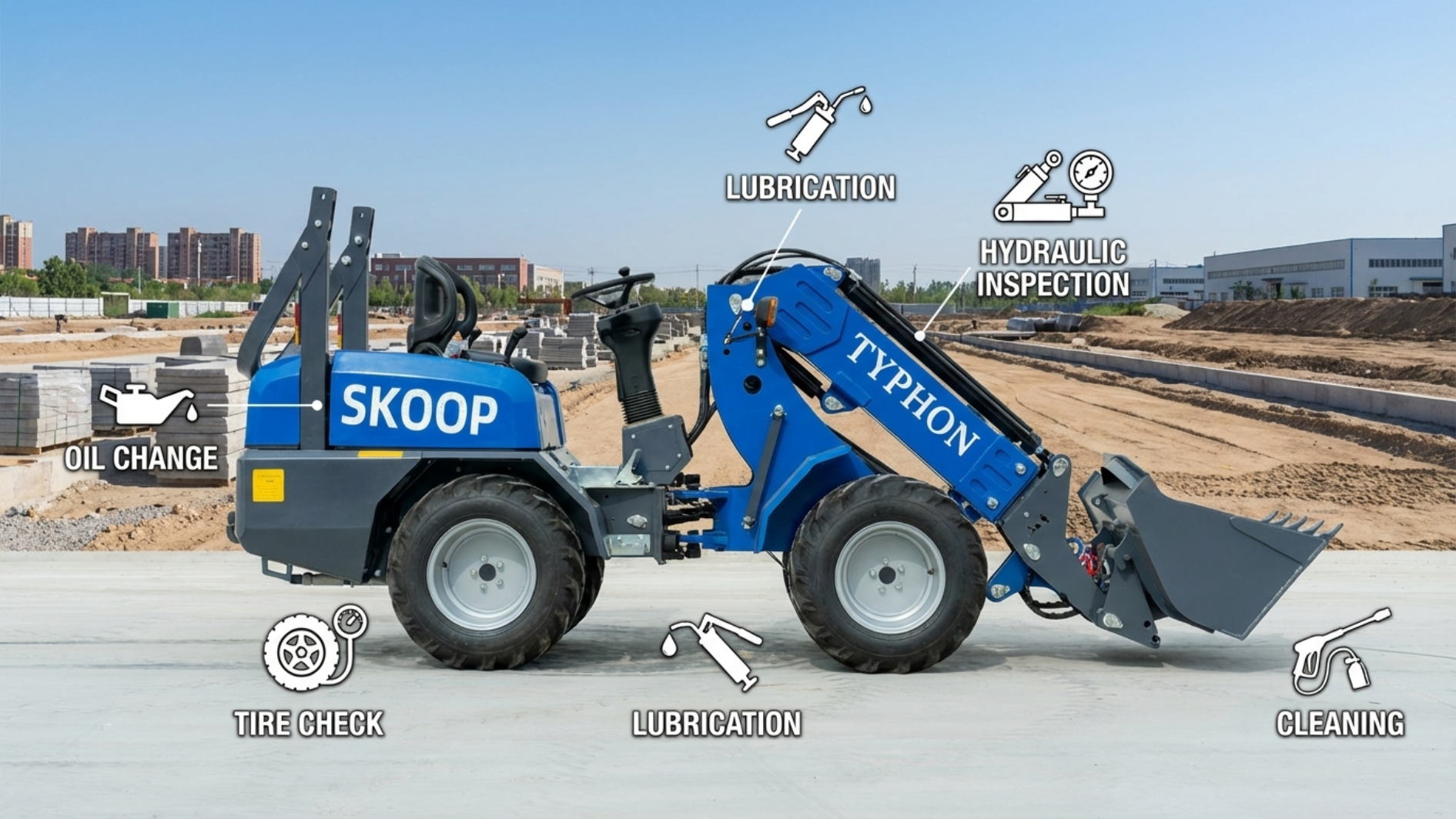
Fluids serve as the lifeblood of your wheel loader. Check the engine oil, hydraulic fluid, and coolant levels daily. Look closely under the machine for any fresh drips or accumulating puddles that indicate a developing leak. Inspect all visible hydraulic hoses for fraying, cracking, or swelling.
Furthermore, check the indicator for the engine air filter. A clogged air intake starves the engine of oxygen. This forces the motor to work harder, burning excess fuel and increasing internal wear on vital engine components.
Tire Health and Pressure
Wheel loaders rely entirely on their tires for traction, stability, and load capacity. Underinflated tires reduce fuel efficiency and drastically increase the risk of sidewall damage. Conversely, overinflated tires create a harsh ride that accelerates operator fatigue and causes uneven tread wear.
Inspect all four tires for deep cuts, embedded rocks, or missing chunks of rubber. Maintaining the exact tire pressure recommended by the manufacturer ensures your operators can handle heavy loads safely across uneven terrain.
Prioritize Strict Lubrication Routines
Friction destroys heavy machinery. Your wheel loader endures immense physical stress at its pivot points during every single material handling cycle. Proper lubrication is the single most important action for maximizing lifespan and preventing costly downtime.
- Grease Daily: The loader arm pins, bucket cylinder pins, and the central articulation joint require fresh grease every day. Skipping even one day accelerates metal fatigue.
- Clean Your Fittings: Always wipe grease zerks clean before attaching your grease gun. Pushing surface dirt into the pin joint acts like sandpaper, rapidly destroying the metal components from the inside out.
- Use Quality Lubricants: Utilize the exact grease grade recommended by the machine’s manufacturer. High-pressure, heavy-duty earthmoving applications demand specialized synthetic lubricants to prevent metal-on-metal contact.
Commit to Scheduled Servicing
Daily walkarounds handle the immediate physical threats, but scheduled servicing ensures long-term mechanical reliability. Your operator’s manual outlines specific service intervals based strictly on engine hours. Never treat these crucial intervals as optional suggestions.
When your machine hits a service milestone, change the engine oil, replace all primary fuel filters, and install fresh hydraulic filters. If your crew operates in harsh, highly dusty environments, you must shorten these service intervals to protect the engine.
We strongly recommend partnering with a certified equipment dealer for major milestone services. Expert technicians possess the advanced diagnostic software required to calibrate electro-hydraulic controls and update machine computers. Relying on professional expertise keeps your loader operating flawlessly at factory specifications.
Troubleshooting Common Wheel Loader Issues
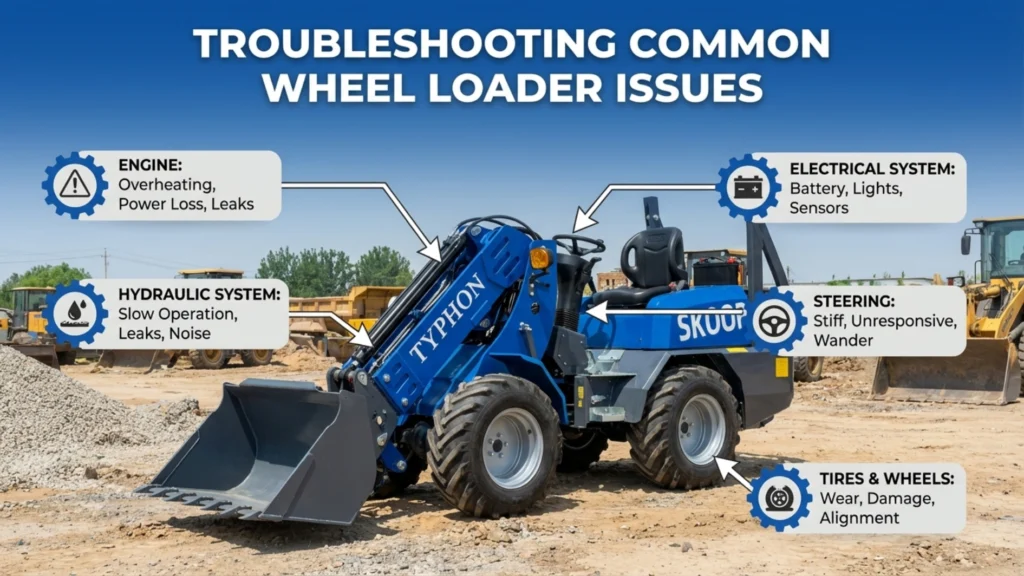
Even with pristine wheel loader maintenance, occasional mechanical issues arise. Training your operators to recognize the early warning signs of trouble saves you thousands of dollars in major repair bills. Please address these common issues promptly:
- Sluggish Hydraulics: If the bucket curls slowly or the lifting arms struggle to raise standard loads, you likely have a hydraulic flow issue. Check for low hydraulic fluid, a heavily clogged hydraulic filter, or a failing pump.
- Engine Overheating: A rising temperature gauge requires immediate attention to prevent engine failure. Stop the machine safely and let it idle to cool down. Inspect for a blocked radiator screen, low coolant levels, or a damaged fan belt.
- Transmission Slipping: If the loader hesitates when shifting gears or struggles to push deep into a material pile, inspect the transmission fluid immediately. Burnt-smelling fluid indicates severe internal wear that requires immediate professional diagnosis.
- Unusual Noises: Grinding, squealing, or popping sounds indicate failing bearings or completely dry pivot points. Never ignore these destructive sounds. Locate the exact source of the noise and repair it before resuming operation.
Conclusion
Proactive wheel loader maintenance secures the reliability, safety, and efficiency of your job site. By enforcing strict daily walkaround inspections, rigorous lubrication schedules, and prompt troubleshooting, you protect your operators and your bottom line.
We encourage you to review your current heavy equipment care protocols today. Download the specific daily service checklist from your equipment manufacturer and mandate its use across your entire fleet. Taking these straightforward, professional actions guarantees you are maximizing lifespan and getting the absolute most value out of your machinery investment.