How to Choose the Right Wheel Loader Size
Equipping your crew with the right heavy machinery directly impacts your daily productivity and overall profitability. When investing in a wheel loader for construction, size is the most critical factor to evaluate. A machine that is too small will struggle with daily tasks, leading to rapid wear and tear. Conversely, an oversized loader wastes fuel, restricts site mobility, and inflates your operating expenses unnecessarily.
We understand that making the right equipment investment requires clear, expert guidance. This guide provides practical, straightforward advice on matching your machinery to your operational demands. By the end of this post, you will understand how to evaluate your job site dimensions, assess material weights, calculate lifting requirements, and align these factors with your budget.
Assess Your Job Site Dimensions and Terrain
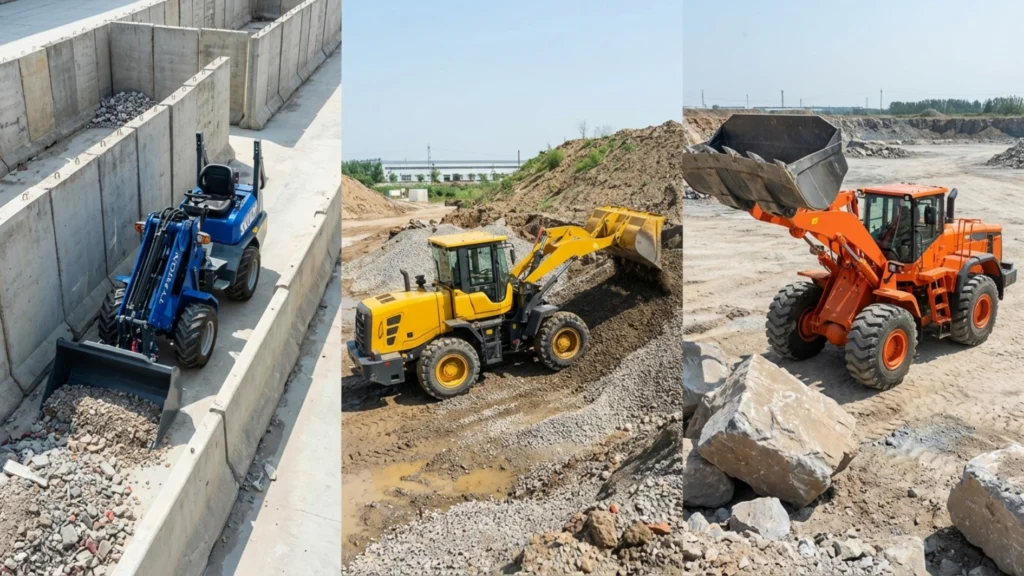
The physical layout of your work environment often dictates your equipment options. You need a machine that navigates the terrain efficiently without compromising operator safety or damaging surrounding structures.
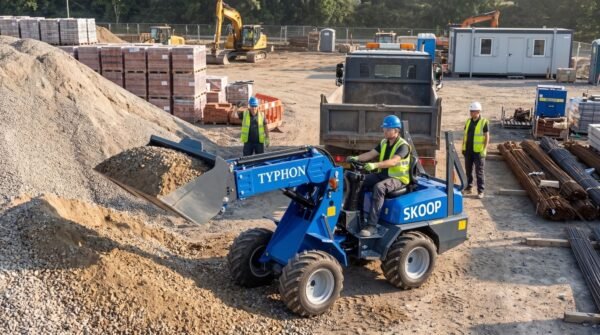
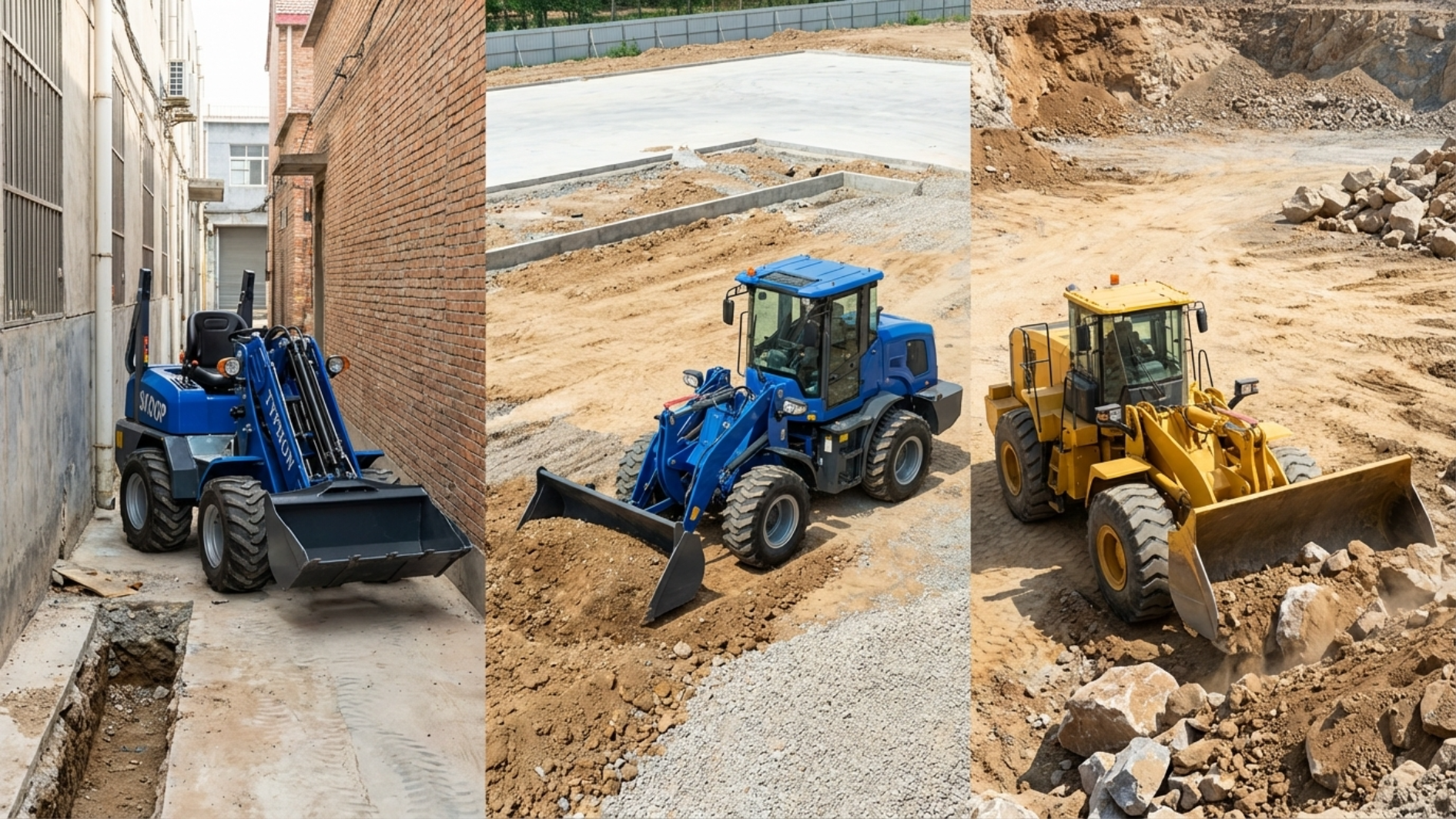
Compact and mini wheel loaders excel in residential developments, landscaping projects, and tight urban construction zones. Their articulated steering provides a tight turning radius, allowing operators to maneuver around obstacles and narrow access points. If your typical project involves working close to finished buildings or navigating through narrow gates, a smaller footprint is essential.
Large commercial sites, highway infrastructure projects, and mining operations require an entirely different approach. In these wide-open spaces, mid-size or large loaders deliver the best results. They travel across vast distances quickly and move massive stockpiles in fewer cycles. Always measure your most restrictive site access points and compare them against the width and height of the loader you plan to purchase.
Consider Dump Height Requirements
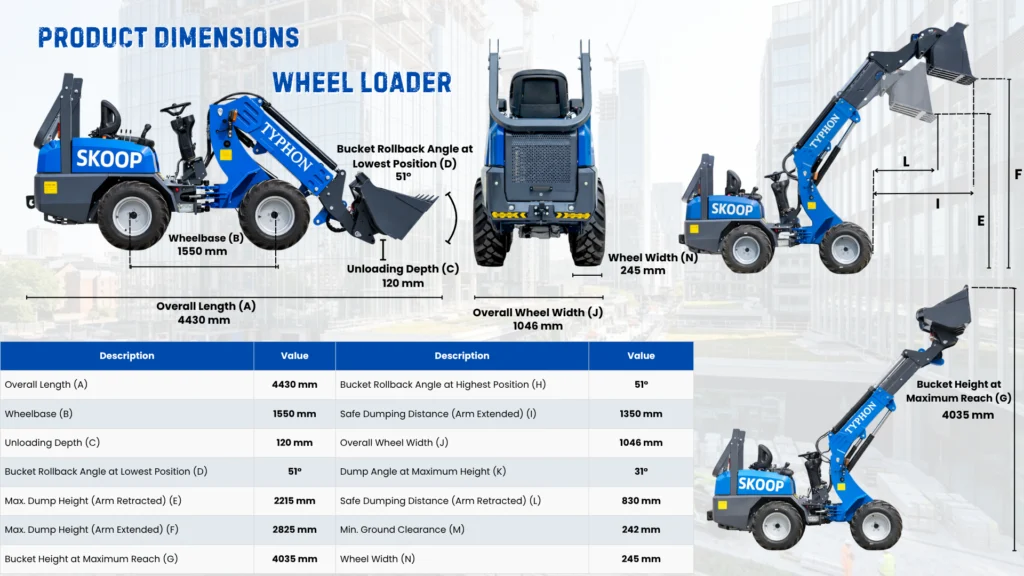
Beyond the ground space, you must evaluate your vertical constraints. If you load material into elevated hoppers or high-sided articulated dump trucks, you need a machine with adequate dump clearance. Measure the height of the tallest truck in your fleet. The loader must easily clear that height while dumping its bucket to prevent equipment damage and material spills.
Evaluate Material Density and Weight
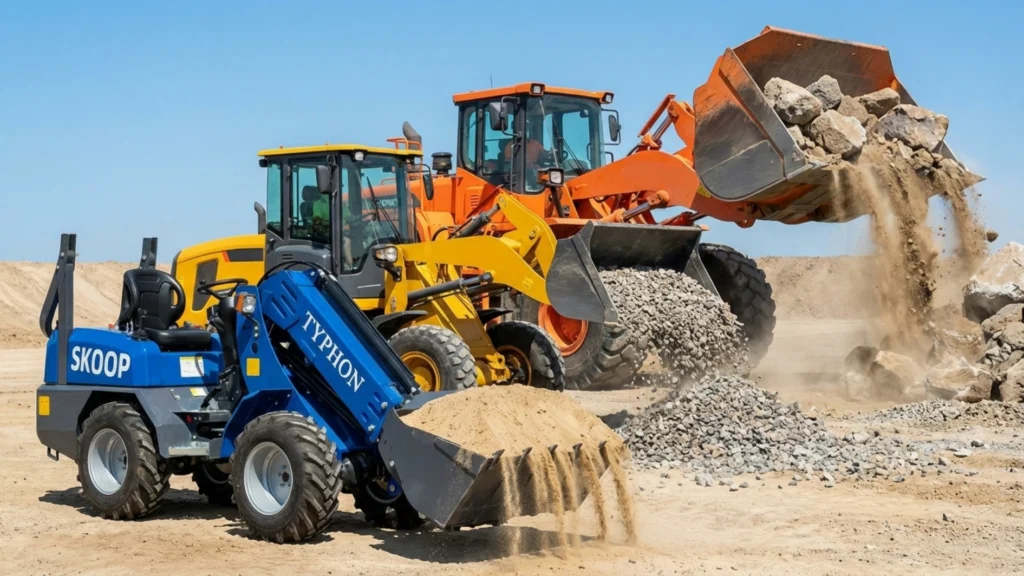
What you move is just as important as where you move it. Selecting a wheel loader size necessitates a thorough understanding of material density. Dry wood chips weigh significantly less than wet sand or blasted rock.
Matching your machine size to your most commonly used materials helps to prevent frequent overloading. Overloading invalidates equipment warranties, accelerates component failure, and puts your operators at risk. Consider the following standard material categories:
- Light Materials: Snow, mulch, and dry topsoil allow you to utilize high-capacity buckets on smaller machines. Your focus here is on moving high volumes quickly rather than needing raw lifting power.
- Medium Materials: Loose dirt, gravel, and dry sand require a balanced approach. You need a mid-sized machine that maintains excellent traction and stability while transporting heavy buckets across uneven ground.
- Heavy Materials: Wet soil, concrete rubble, and solid rock demand heavy-duty machines. These applications require high breakout force and robust lifting arms to safely pry materials loose and transport them.
Before making any equipment purchases, always consult material density charts. You must ensure that the fully loaded bucket weight does not exceed the machine’s safe operating limits.
Calculate the Required Lifting Capacity
Your lifting capacity directly affects both your daily output and site safety. You need a wheel loader that can effortlessly handle your typical loads without straining the hydraulic system. Two crucial performance metrics that you should focus on are breakout force and tipping load.
Breakout Force
The breakout force measures the machine’s maximum effort to extract materials from a compacted pile. Moving heavy, dense materials requires a high breakout force. Operators will find it difficult to fully fill the bucket if your wheel loader is too small and has insufficient breakout force. This leads to lost time, increased fuel consumption, and unnecessary engine wear.
Tipping Load
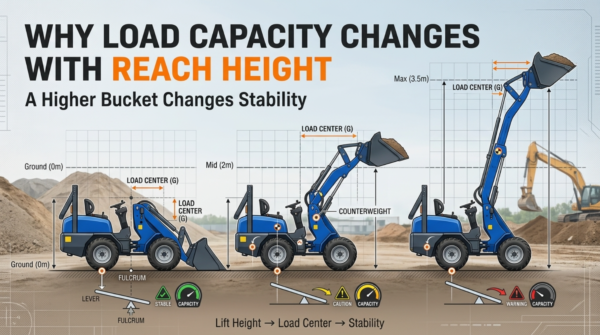
The tipping load indicates the maximum weight the loader can lift before its rear wheels lift off the ground. The fully articulated tipping load should always be assessed. During a sharp turn, this metric shows the machine in its most vulnerable position.
Your maximum operating load should never be greater than 50% of the machine’s fully articulated tipping load as a matter of standard safety procedure. This integrated buffer guarantees unwavering stability, safeguards your employees, and averts expensive mishaps on steep or uneven terrain.
Factor in Your Operational Budget
Acquisition price represents only one part of the financial equation. To protect your bottom line, you must calculate the total cost of ownership over the machine’s entire lifespan. Larger machines carry higher upfront purchase costs, but they also consume more fuel and demand more expensive replacement parts.
However, if a larger machine completes a job in half the time of a smaller unit, the labor savings often offset the higher operating expenses. Consider these ongoing financial factors when evaluating your options:
- Fuel Consumption: Smaller engines use less fuel. However, running a small machine at its maximum capacity constantly burns fuel faster than running a larger machine at half capacity.
- Transportation Expenses: Moving heavy equipment requires specialized lowboy trailers and commercial drivers. Compact models often fit on standard heavy-duty utility trailers, lowering your transport expenses between sites.
- Maintenance Requirements: Routine service costs scale with the size of the equipment. Factor in larger fluid capacities, heavy-duty filter prices, and the cost of replacing massive earthmoving tires.
- Fleet Compatibility: Ensure the new loader can utilize the attachments you already own. Sharing attachments across your fleet maximizes the value of your initial investment.
Maximize Your Job Site Efficiency
Selecting wheel loader equipment is a strategic choice that affects your company’s future productivity. You can guarantee optimal productivity and crew safety by closely examining your job site’s dimensions, material density, lifting needs, and financial constraints.
To test various machine sizes on your active job sites, we highly recommend working with a reputable equipment dealer. The best way to ensure satisfaction is to test the equipment under your specific working conditions. Your new wheel loader will provide dependable, profitable performance for many years to come if you take the time to make an informed decision today.